Vietnam Motorcycle Tours
MotoTours Asia runs seven guided motorcycle tours in northern Vietnam, from three to seven days. We ride small mountain roads instead of the main tourist circuit. The company has been running tours since 1995 and was the first in Southeast Asia to run a BMW GS adventure fleet. You can ride yourself or travel pillion, with a support vehicle throughout.
What makes these tours different
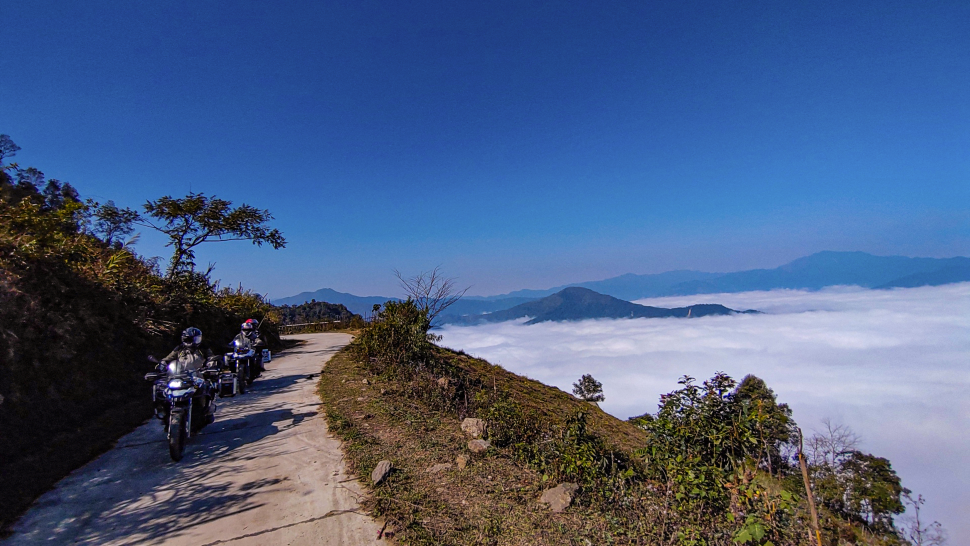
Our routes avoid the big roads. Where another operator sends you down the highway, we take the pass — the narrow one that climbs through Hmong and Tay villages and drops into a valley nobody photographs. That choice costs time and it is the whole point.
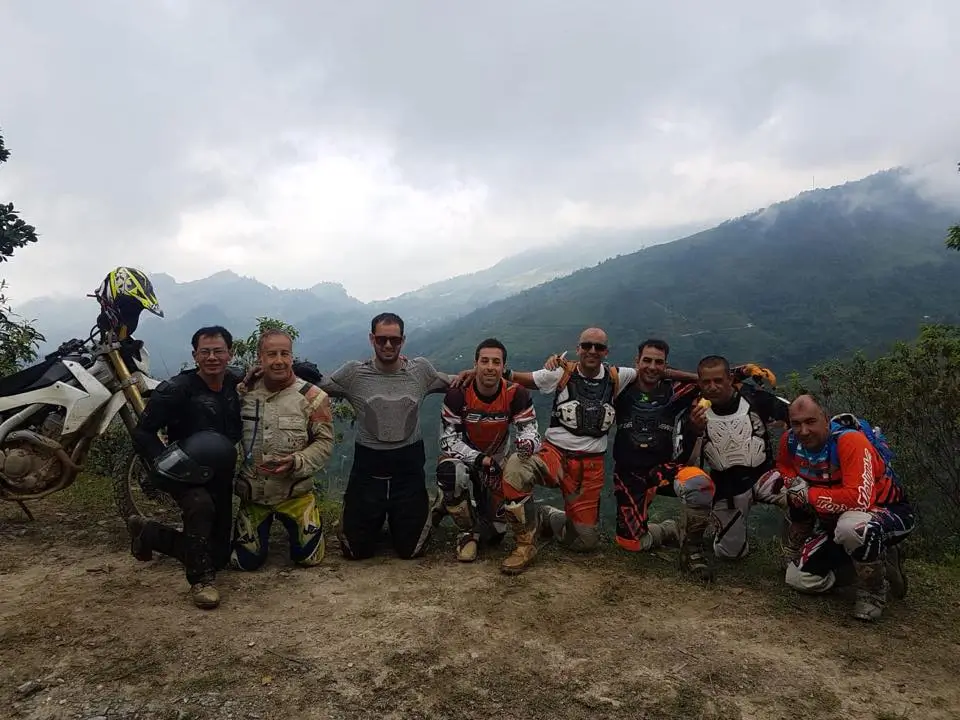
MotoTours Asia has been running guided motorcycle tours since 1995 and has held an international tour operator licence since January 2006 (No. 0491/2006/TCDL-GP LHQT). Our founder has led motorcycle journeys for thirty years, the longest a sixty-day ride from Hanoi to Portugal. Every tour runs in a small group with a lead guide, a mechanic and a support vehicle carrying luggage, spares and anyone who has had enough for the day.
Which tour suits you
| Tour | Days | Where it goes |
|---|---|---|
| Ha Giang Loop & Cao Bang | 6 | Ma Pi Leng pass, the border patrol road, Ban Gioc waterfall |
| The End of the Northwest Sky | 7 | Dien Bien and Lai Chau to A Pa Chai, Vietnam's westernmost point |
| Border Patrol Route | 5 | The patrol road along the Laos and China frontier, ending in Sapa |
| Forgotten Fairyland | 5 | Muong Cha, the Da River gorges, the Tua Chua limestone plateau |
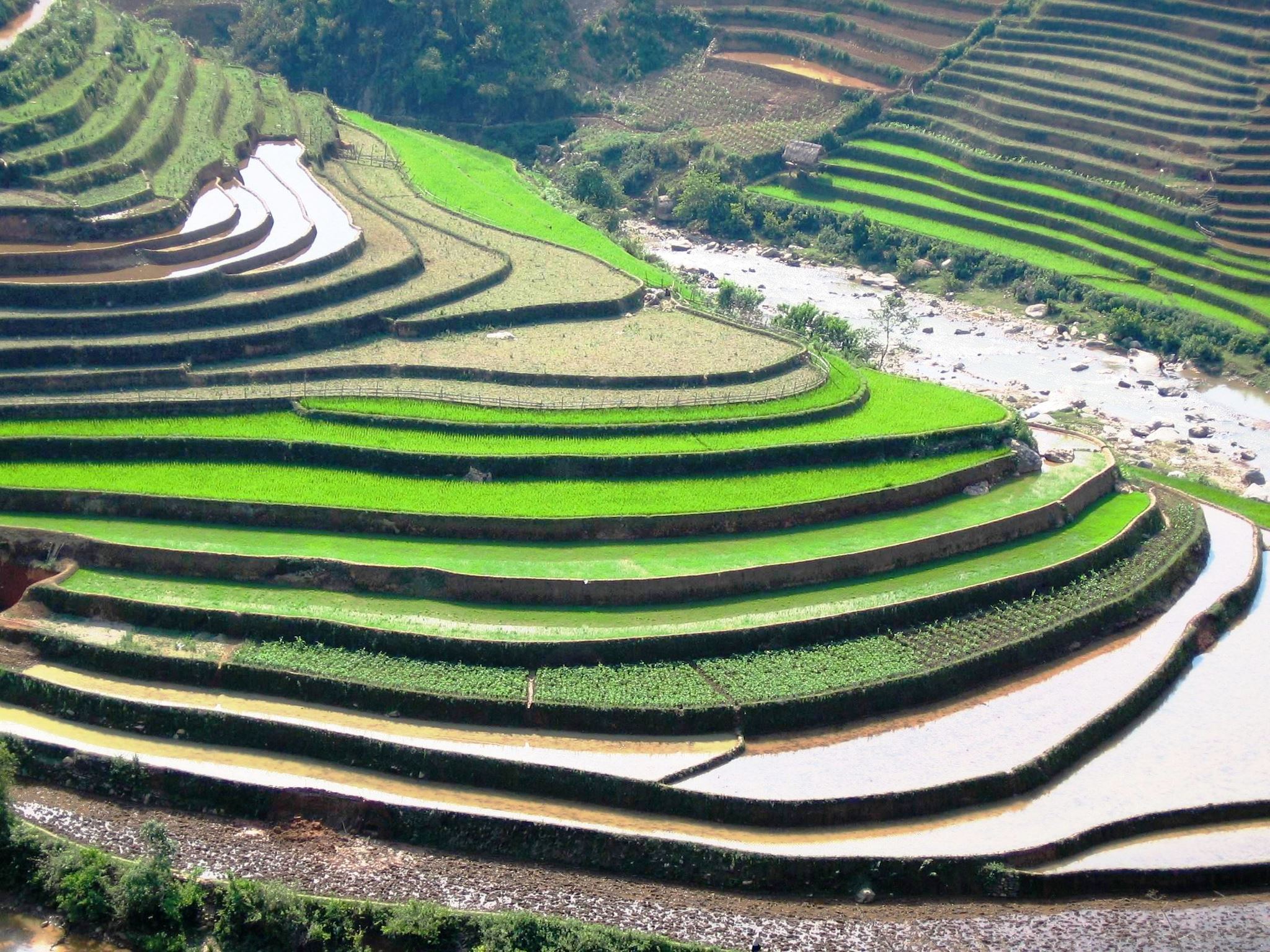
| Golden Season in the Highlands | 5 | Mu Cang Chai and Y Ty during the golden rice harvest |
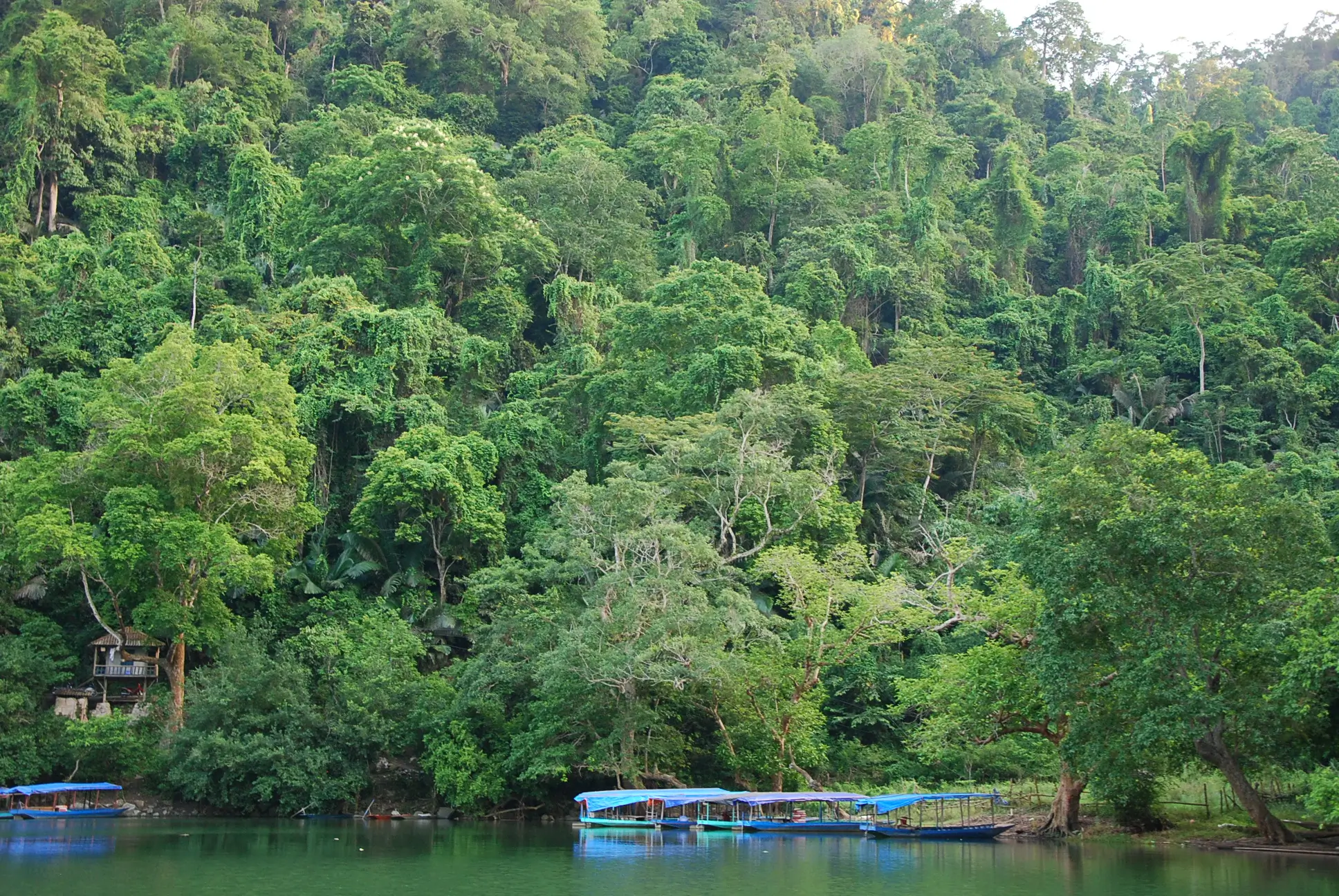
| Ba Be & Cao Bang | 4 | Ba Be lake, the Cao Bang UNESCO geopark, Ban Gioc waterfall |
| Dien Bien: Muong Phang & Muong Lao | 3 | Quiet mountain roads around Dien Bien — the short introduction |
When is the best time to ride northern Vietnam?
September to November is the strongest window: the rains have passed, the air is clear, and in late September and October the terraces at Mu Cang Chai and Y Ty turn gold. March to May is dry and warm with flowering season in the high valleys. December to February is cold above a thousand metres and fog can close in on Ma Pi Leng for days. June to August brings heavy rain and the risk of landslides on mountain roads — we still ride, but the itinerary has to stay flexible.
Self-drive or pillion?
Both work. If you hold a motorcycle licence and have ridden on loose surfaces before, take your own bike — northern Vietnam rewards riders who can read a road. If you have never ridden a mountain pass, or you simply want to watch the landscape instead of the next corner, travel pillion with one of our riders. Couples often split the difference: one rides, one sits behind, and they swap. The support vehicle follows either way, so changing your mind mid-tour costs nothing.
What about the paperwork?
To ride legally in Vietnam on anything above 50cc you need a motorcycle licence from your own country plus an International Driving Permit issued under the 1968 Vienna Convention. Permits issued under the 1949 Geneva Convention — the kind issued in the United States, Australia and Canada — are not recognised here. Tell us what you hold when you enquire and we will tell you plainly whether you can self-drive or should ride pillion.
Vietnam Motorbike Tours: Guided Rides on the Roads Other Operators Skip
Most Vietnam motorbike tours run the same handful of routes. We built ours the other way round: avoid the big roads, take the small ones, and stay away from the places the coaches reach. That principle has shaped every route we have drawn since 1995 — and it is why our riders end up at the westernmost point of Vietnam, on the border patrol track above Lai Chau, and in Tay and Nung villages that see a foreign face a few times a year.
MotoTours Asia is the motorcycle-touring brand of Voyage Vietnam Co., Ltd, holder of Vietnamese international tour operator licence No. 0491/2006/TCDL-GP LHQT. We run guided tours only, with a lead guide, a mechanic and a support vehicle, on a fleet that runs from a Honda 110 to a BMW R1200 GS sidecar.
Our Vietnam motorbike tours
Seven guided routes, three to seven days, every one led in person rather than handed to you as a GPS file. Not sure which to pick? Ha Giang Loop & Cao Bang if it is your first time in northern Vietnam; Border Patrol Route or The End of the Northwest Sky if you have ridden dirt before and want the frontier; Golden Season in the Highlands if you can come in September or October.
Northeast Vietnam: the Ha Giang Loop, and what comes after it
The Ha Giang Loop is the most famous ride in Vietnam and, by now, the busiest. Ma Pi Leng pass on a Saturday in October is a queue. We still ride it — it earns its reputation — but we treat it as the first half of a longer journey rather than the whole trip.
East of Ha Giang the crowds stop. Cao Bang is a UNESCO Global Geopark of limestone towers and flat green valleys, with Ban Gioc — the largest waterfall on any Southeast Asian border — at the far edge of it. The roads are quieter, the passes are just as good, and the homestays still belong to the families who run them.
Two tours cover this ground. Ha Giang Loop & Cao Bang links both provinces across five days, with riding legs of 160 to 230 km. Ba Be – Cao Bang takes four days, starting at Ba Be Lake and the Nang River before turning into the Cao Bang karst, through Tay and Nung country.
If you are choosing between them: Ha Giang has the more dramatic single pass, Cao Bang has the better week.
Northwest Vietnam: the border patrol road
Dien Bien and Lai Chau are the most remote provinces in the country. The mountains here mark the frontier with Laos and China, and the patrol road that follows that frontier is the reason experienced riders come back to us.
Border Patrol Route runs five days from Dien Bien through A Pa Chai — the westernmost point of Vietnam, where three countries meet — then Keng Mo, U Ma Tu Khoong, Si Lo Lau and Dao San, finishing in Sapa. The End of the Northwest Sky takes seven days over the same frontier and loops back through Tua Chua and Muong Phang, the command post of the Dien Bien Phu campaign.
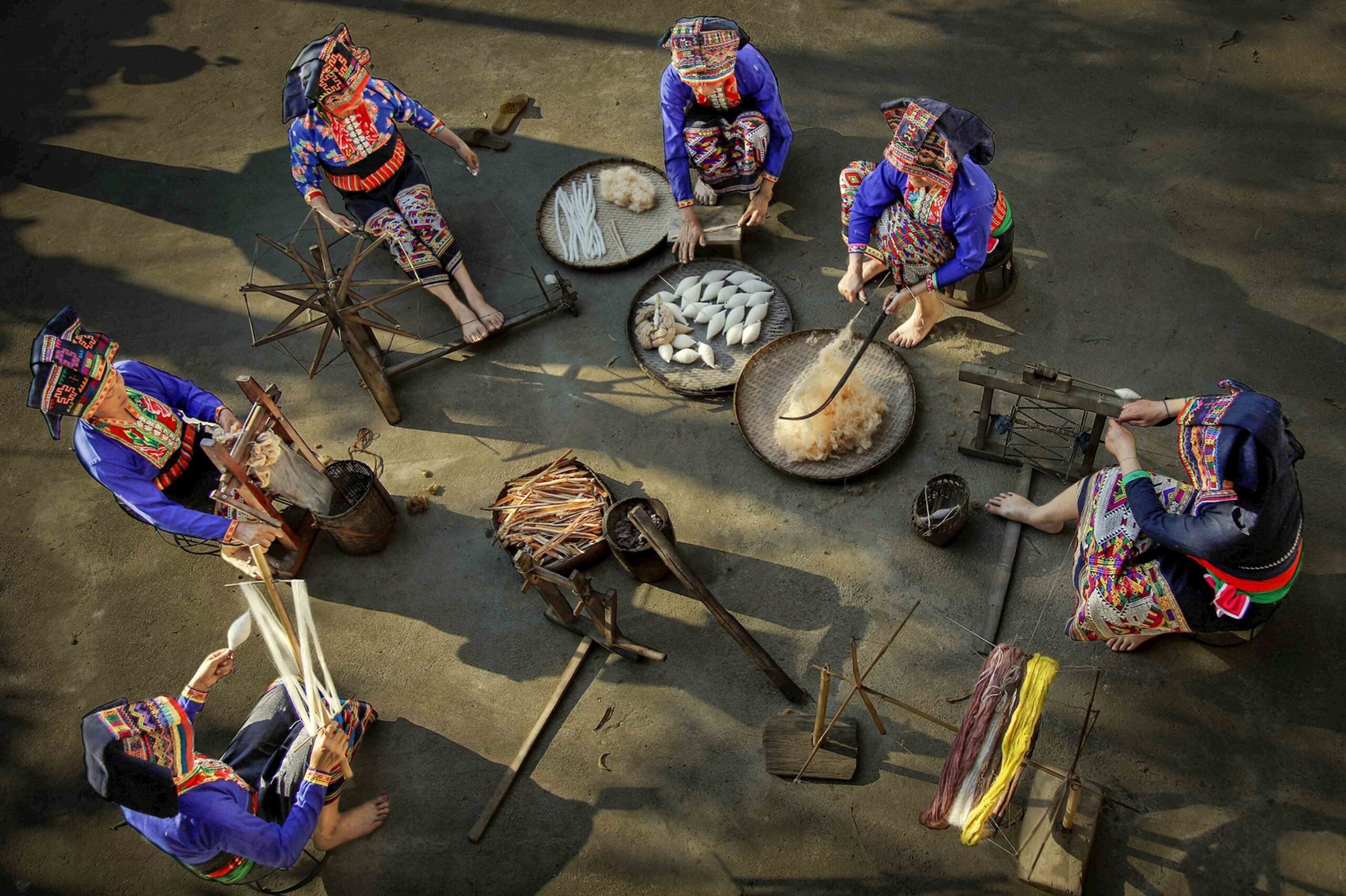
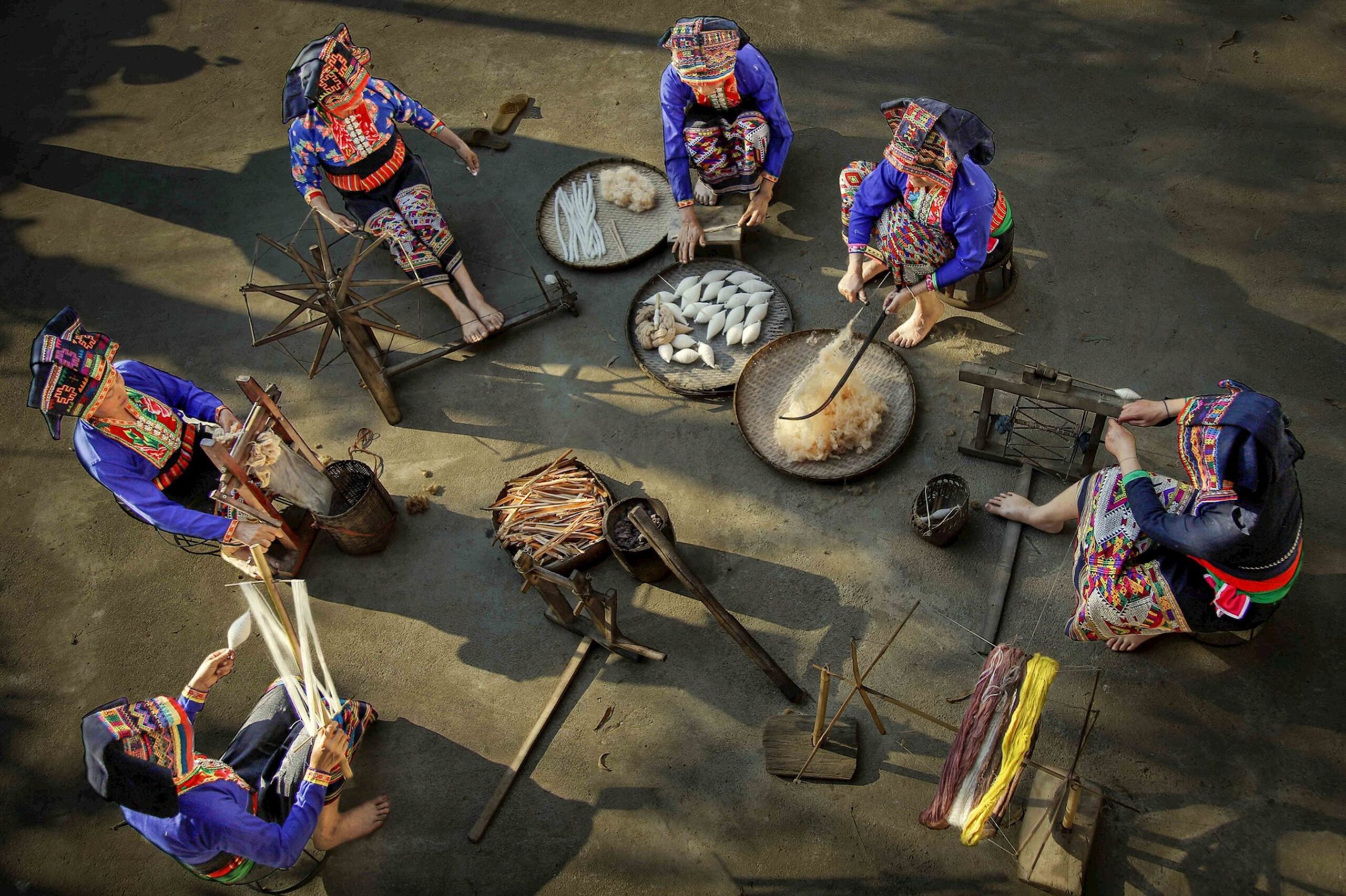
These are the two hardest routes we run in Vietnam. Both are ridden on Honda 250s or BMW F800 GS adventure bikes; neither is a first-week-on-a-bike trip. The villages belong to the Ha Nhi, La Hu and Si La — some of the smallest ethnic groups in the country.
Two gentler Northwest routes sit alongside them. Forgotten Fairyland follows the Da River through Muong Cha and Tua Chua to Sapa. Golden Season in the Highlands is a five-day September–October route through Mu Cang Chai, Y Ty and Hoang Su Phi, timed to the rice harvest.
Crossing into Laos
Luang Prabang is under 400 km from Dien Bien Phu — closer than Hanoi. Muong Lao takes three days out of Dien Bien through the Tay Trang border gate; a longer four-day option, Discover Nam Ou River, follows the Nam Ou through northern Laos and back. Both include the border paperwork — you ride, we handle the gate.
The bikes: Honda 110 to BMW R1200 GS
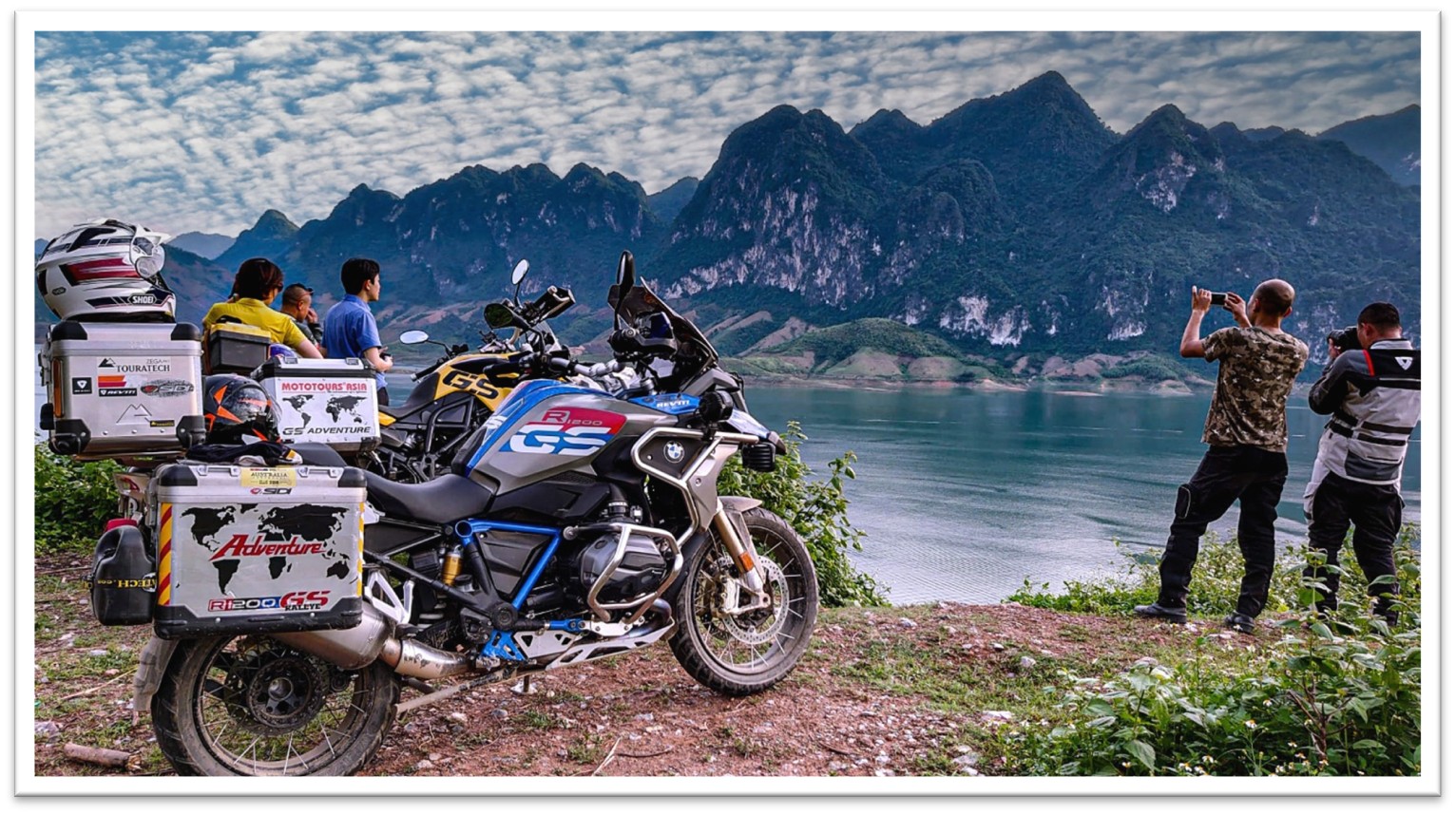
We have changed the fleet three times in twenty years to keep it at international standard — Minsk 125s in the 1990s, Royal Enfield Bullets through the 2000s, and BMW GS adventure bikes since 2019, when we became the first operator in Southeast Asia to run a BMW adventure fleet.
Honda 110–125cc — semi-automatic, the lightest option, fine for the Cao Bang and Ha Giang routes.
Winner 150 and Honda XR / CRF 150 — the everyday step up; enough for the Northwest if you have ridden trails before.
Honda CRF 250–300 — our most-picked bike for the frontier routes.
Honda CB 500 X — for riders who want a road bike on the paved sections.
BMW F800 GS — the adventure standard; available on every route in this list.
BMW R1200 GS and R1200 GS Sidecar — on the Ha Giang & Cao Bang route. The sidecar is the option for a non-riding partner who still wants the passes.
Every tour includes the bike, fuel, a mechanic on the road and a support vehicle carrying luggage and spares. You can also ride pillion on a guide bike on any route.
What a Vietnam motorbike tour costs
Price depends on three things: the bike, how many riders are in the group, and whether you want a room to yourself. A larger group brings the per-rider price down sharply. On the five-day Ha Giang & Cao Bang route, a Honda 110–125 costs US$831 per rider in a group of five and US$592 in a group of fifteen; the same route on a BMW R1200 GS sidecar runs from US$2,425 to US$2,893.
Everything is included except international flights, visa and personal insurance: bike, fuel, guide, mechanic, support vehicle, accommodation, entry permits for the border zones, and all meals on the road.
When to ride northern Vietnam
September to November is the best window: the rain has stopped, the air is clear, and late September into October is the golden rice harvest in Mu Cang Chai, Y Ty and Hoang Su Phi. March to May is the second season — warm, dry, with the flowering season on the Dong Van plateau. December to February is cold and can be genuinely freezing above 1,500 m, but the light is the best of the year and there is nobody about. June to August brings the monsoon; we ride it, but landslides can move a route with no notice, and we will tell you honestly before you book.
Why ride with MotoTours Asia
Twenty years, and a licence with a number on it. Founded 2005; Voyage Vietnam Co., Ltd since 2006, international tour operator licence 0491/2006/TCDL-GP LHQT.
Routes we drew ourselves. A Pa Chai, Keng Mo, U Ma Tu Khoong, Si Lo Lau — you will not find these on a comparison site.
Guides who have ridden further than the tour. Our founder, Nguyen Anh Tuan, has led Hanoi to Portugal in 60 days and takes three to four expeditions a year from Yunnan across Tibet to Everest Base Camp.
Written about by people who checked. South China Morning Post, BBC, Al Jazeera, Nikkei Asia, Adventure Bike Rider, Travel Weekly Asia.
Communities, not backdrops. Our founding mission is to awaken the potential and develop the community — the homestays and guides on these routes are local, and paid directly. More on how we work.
Vietnam motorbike tour FAQ
Do I need a licence to ride a motorbike in Vietnam?
Yes. Vietnam recognises International Driving Permits issued under the 1968 Vienna Convention — a 1949 Geneva permit, which is what the United States issues, is not valid here. Your permit must also cover the engine class of the bike you ride, and it covers you for the first three months of your stay. We check this with you before booking and can put you on a 110–125cc machine if your permit does not cover a bigger engine.
How much riding experience do I need?
For Ha Giang, Cao Bang and Ba Be, road experience and comfort on a small bike is enough. For the Northwest frontier routes you want real experience on loose surfaces. Tell us honestly what you have ridden and we will tell you honestly which route fits.
Is it safe to ride a motorcycle in Vietnam?
Riding in the northern mountains is a different proposition from riding in Hanoi traffic. On our tours you ride behind a lead guide who knows the road, with a mechanic and a support vehicle in the group, on maintained bikes with proper gear. We ride to the slowest rider, and we will shorten a day rather than push through weather.
How many days do I need?
Three days is enough for a first taste, five is the sweet spot, seven lets you reach the frontier. Our Vietnam routes run three to seven days and can be joined together — several riders do Ha Giang and Cao Bang, then continue into the Northwest.
Guided or self-guided?
We only run guided tours. The border zones on our Northwest routes need permits and a registered operator, the mountain weather changes fast, and a breakdown two hours from the nearest town is a different problem with a mechanic in the group than without one.
Can my partner come without riding?
Yes — as a pillion on any route, or in the BMW R1200 GS sidecar on Ha Giang & Cao Bang. The support vehicle also has seats.