CHINA SELF-DRIVE TOUR: YUNNAN – SICHUAN – TIBET – EVEREST BASE CAMP
ONE‑WAY JOURNEY RIDING THE CLOUD INTO THE SNOW LAND – THE ANCIENT TEA HORSE ROAD – G318
14 days 13 nights
TOUR CALENDAR
| Departure | Route | Duration | Vehicle | Pick‑up | Drop‑off |
|---|---|---|---|---|---|
| 10 Oct – 23 Oct 2026 | Tea Horse Road | 14 days | Rent in China | Kunming | Lhasa |
| 12 Dec – 25 Dec 2026 | Tea Horse Road | 14 days | Rent in China | Kunming | Lhasa |
| 24 Apr – 07 May 2027 | Tea Horse Road | 14 days | Rent in China | Kunming | Lhasa |
| 10 Jul – 23 Jul 2027 | Tea Horse Road | 14 days | Rent in China | Kunming | Lhasa |
| 28 Aug – 10 Sep 2027 | Tea Horse Road | 14 days | Rent in China | Kunming | Lhasa |
| 20 Nov – 03 Dec 2027 | Tea Horse Road | 14 days | Rent in China | Kunming | Lhasa |
Tibet: A land of mystery, often called the “Third Pole” of our planet, crowned by the Roof of the World—the majestic Himalayas and their eternal snow-capped peaks. Tibet has always been considered a paradise on earth, a sanctuary for the divine. It is a land of magnificent, surreal beauty—at once breathtaking, unforgiving, and holy. Often described as the realm suspended between reality and myth, it is a world steeped in spirituality and profound mystery.
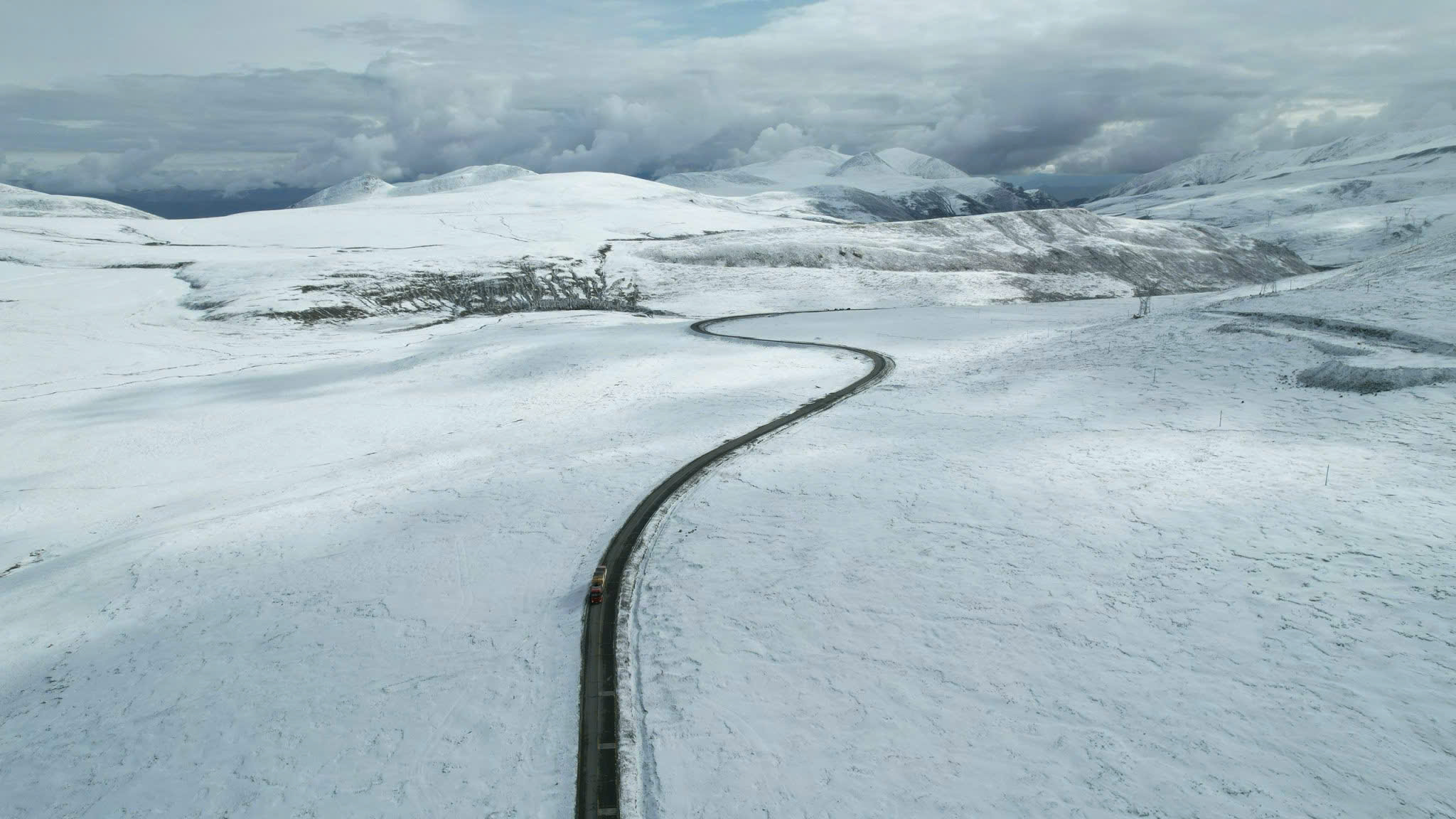
Prepare yourself to face the formidable challenges of the Himalayas, particularly on the segment now known as National Highway G318. Imagine a ribbon of asphalt winding over the giant peaks of the Himalayas, waiting for you to carve out the adventure of a lifetime! This route was once the longest and most grueling ancient trade route in the world, spanning over 10,000 km, where tea was bartered for horses and other precious goods:
- Renowned as one of the highest and most treacherous ancient roads in the world.
- Traversing diverse and extremely difficult terrain: from the tropical rainforests of Yunnan to Himalayan peaks over 5,000 meters, featuring sheer cliffs, raging rivers, and the vast steppes of Tibet.
- Harsh weather conditions—oxygen deprivation at high altitudes, blizzards, landslides, and freezing temperatures—were constant dangers.
- Wheeled transport was nearly impossible; transport relied mainly on pack horses, mules, yaks, and resilient porters capable of carrying hundreds of pounds of tea on their backs for months on end.
- Banditry was also a frequent threat.
- Very few merchants could complete the entire journey.
The Ancient Tea Horse Road is no longer exactly as it was, but amidst the majestic expanse of this journey, you will lose yourself in the peaceful beauty of ancient Tibetan villages and sacred monasteries nestled in the clouds. You will immerse yourself in the gentle rhythm of life, connecting deeply with the culture and customs of the local people.
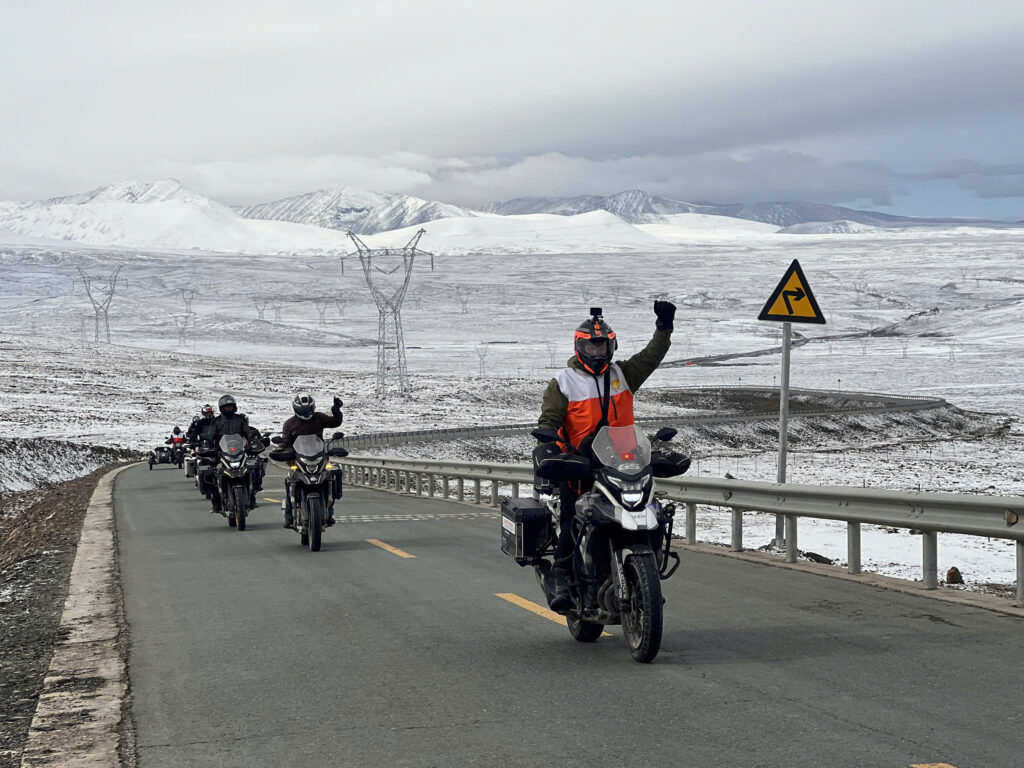
There is no better feeling than self‑driving to explore, experience and connect with the diverse cultures from Yunnan to Sichuan, conquer the Ancient Tea Horse Road stretching across the mighty Himalayas, conquer the roof of the world at Everest Base Camp, and explore the most mysterious land on this planet.
BASIC INFORMATION:
Start / End point: Kunming, Yunnan (China) / Lhasa, Tibet (China)
Airports: Changshui, Kunming (IATA: KMG, ICAO: ZPPP) / Lhasa Gonggar, Tibet (IATA: LXA, ICAO: ZULS)
Total duration: 14 days, 13 nights (or 9 days 8 nights option)
Total one‑way riding distance: ~4,000 km (or 2,800km for 9 days 8 nights option)
Hotel standard: 3‑4 star hotels
Rest day: 1 day in Lhasa
Riding days: 11 days (or 7 days for 9 days option)
One‑way motorcycle transport before and after tour (approx. 3,000 km):
Before tour: from rental location to Kunming (Yunnan, China)
After tour: from Lhasa (Tibet, China) back to the rental location
Detailed Itinerary
Day From To Distance (km) Riding time (h) Sleeping altitude (m) Meals 1 KUNMING ARRIVAL 0 0 1,982 D 2 KUNMING MULI 520 8 3,000 B, L, D 3 MULI YADING (SICHUAN) 260 4 2,900 B, L, D 4 YADING XIANGCHENG 150 4 2,700 B, L, D 5 XIANGCHENG RUMEI 310 5 3,000 B, L, D 6 RUMEI RANWU 390 6 3,850 B, L, D 7 RANWU NYINGCHI 350 7 2,900 B, L, D 8 NYINGCHI LHASA 400 6 3,656 B, L, D 9 LHASA DEPARTURE 0 0 0 B FULL ITINERARY: 14 DAYS
9 LHASA REST DAY 0 0 3.656 B, L, D 10 LHASA LHATSE 410 6 4.035 B, L, D 11 LHATSE OLD TINGRI 180 3 4.348 B, L, D 12 TINGRI GYANTSE 400 6 3.977 B, L, D 13 GYANTSE LHASA 260 4 3.656 B, L, D 14 LHASA DEPARTURE 0 0 0 D (B = breakfast, L = lunch, D = dinner)
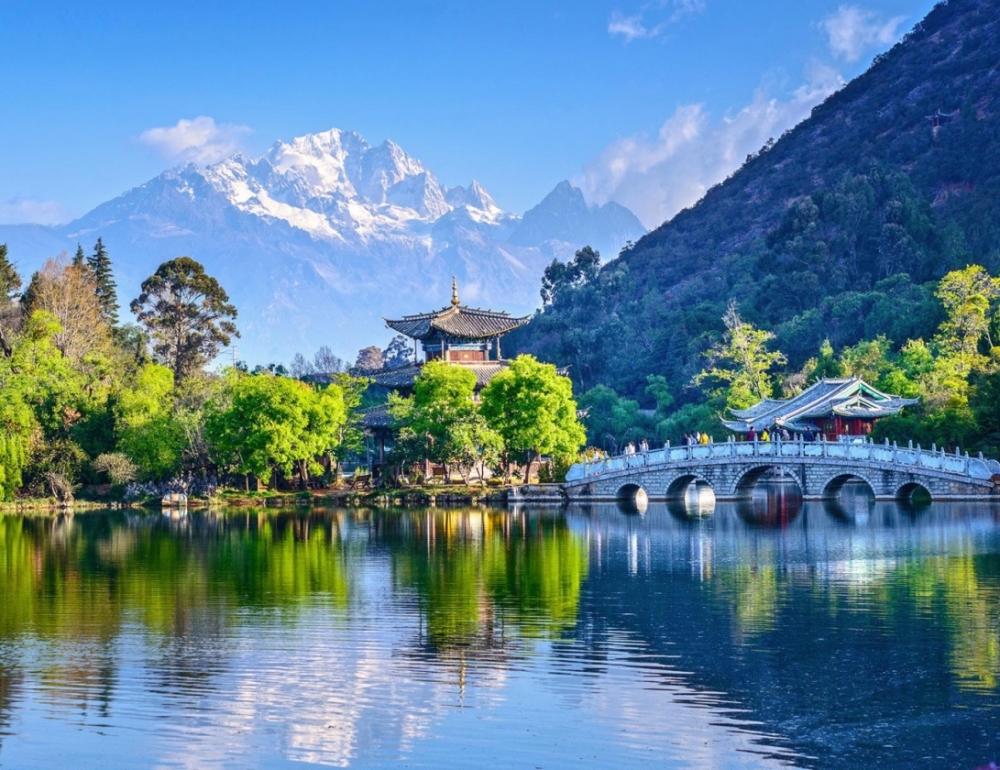
1. KUNMING ARRIVAL – Gateway of Legends (2,007m)
MotoTours Asia’s vehicle and guide will pick up the group at Changshui International Airport (Kunming) and transfer you to Kunming city. Arrive at the hotel, rest, prepare bikes, install intercom groups, test ride… At 19:00, group meeting to receive final briefing on the lead rules and regulations during the tour in Yunnan, Sichuan and Tibet. Answer any questions before the Farewell Dinner.
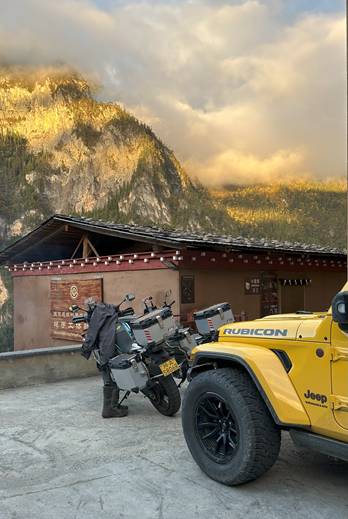
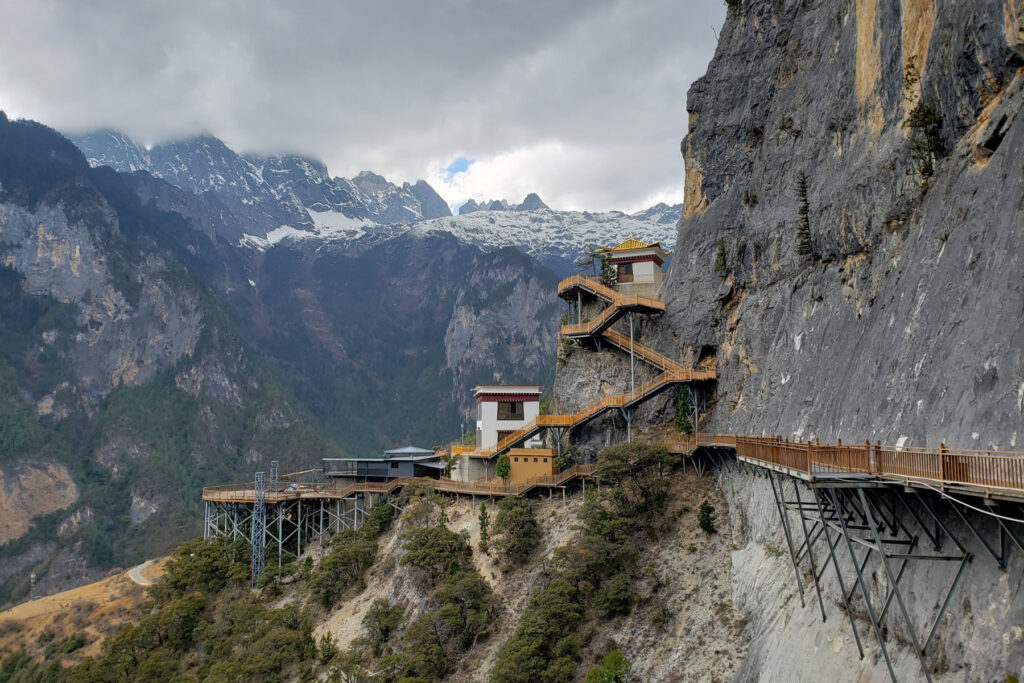
2. KUNMING – MULI (520km | Highest point: 3,200m | Destination altitude: 2,100m)
The long journey begins in Kunming, the gentle “Spring City”, where we get our last energy fill before entering a world of altitude and solitude. We are not just leaving urban comfort; we are stepping into a journey through time, following the history of Lama kings and Western explorers like Joseph Rock. The G5 and G4216 expressways cut through the characteristic red‑soil landscapes of Yunnan, gradually transforming into deep canyons and roaring silver rivers of the Great Snow Mountains. Muli, hidden in a valley, was once the power center of an independent Buddhist kingdom now forgotten. On the first evening, savor the rich flavor of Sichuan cured pork by a warm fireplace, listen to stories of the land of the gods, and prepare yourself for the real challenge starting tomorrow. Note: This expressway section is an ideal stepping stone to check the turbo system of your bike before entering the oxygen‑deficient region.
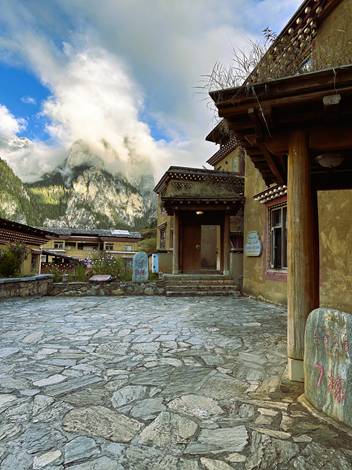
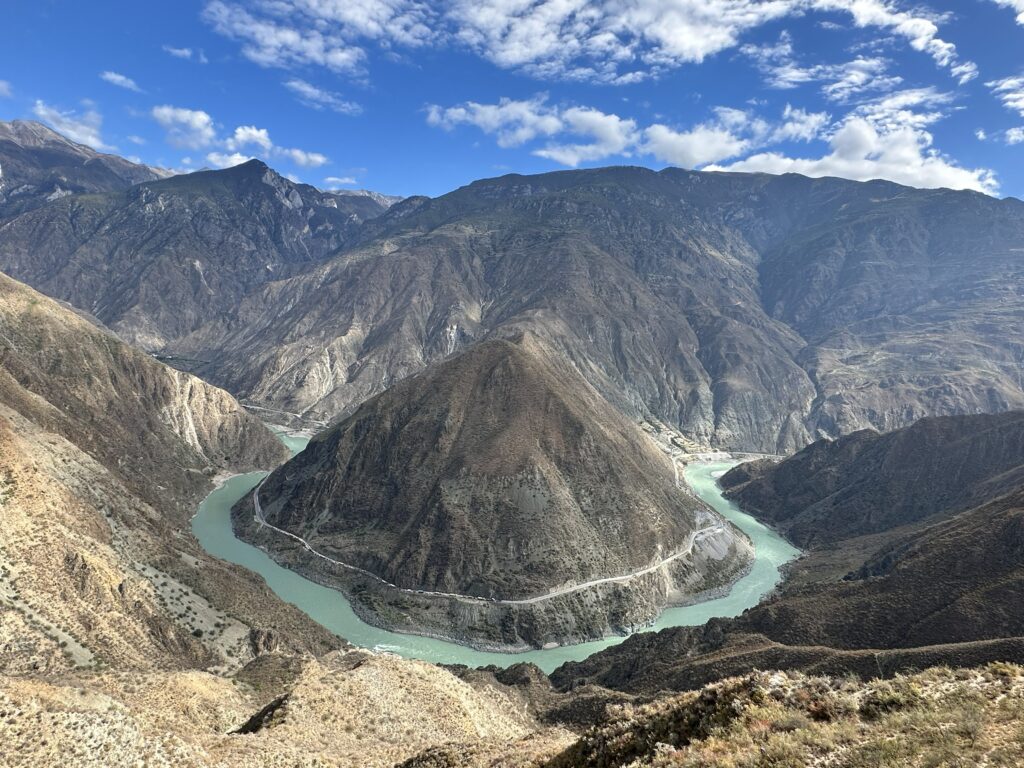
3. MULI – YADING (230km | Highest point: 4,700m | Destination altitude: 2,700m)
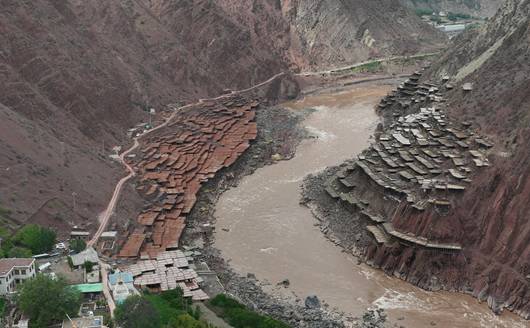 Today, we leave the flat asphalt roads to enter the true world of dreamers and explorers. The S220 route with its hairpin bends hugging the cliffs is the first test for both rider and SUV. Conquering Balagong Pass at an altitude of 4,700m is not just a technical challenge, but also a rite of passage: from the world of humans to the realm of the mountain gods. At the windy pass, Lungta prayer flags flutter, carrying the prayers of the Tibetan people into the mountain wind. The thin, icy air is the first reminder of the harshness of the high altitude. Descending, we enter the sacred land of Yading, known as the "last Shangri-La", where three holy peaks (Chenresig, Jambeyang, Chanadorje) protect crystal-clear lakes like jewels. The first night near 4,000m – listen to your body, drink warm ginger water, and let sleep come naturally. This is your chance to get used to the slow breathing of the plateau.
4. YADING (SIGHTSEEING) – XIANGCHENG (110km | Highest point: 4,700m | Destination altitude: 2,900m)
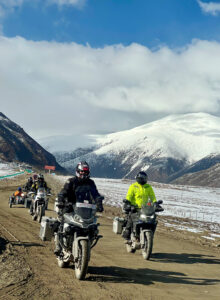 Today is a spiritual gift. We will do a light trek into the heart of “Shangri‑La”, where every step feels like walking on soft grass under the shadow of the Three Sacred Mountains. Five‑Color Lake and Milk Lake are not just beautiful scenery; they are natural sacred sites in local beliefs, where the purest energy of nature gathers. After an emotional morning, we make a spectacular descent to Xiangcheng. This change not only allows the body to relax after high altitude but also brings us into a different cultural world: the Xiangcheng valley with its unique white‑stone houses, creating a picturesque landscape at the foot of the mountains. Sungkorlin Monastery is a hidden architectural gem, famous for its interior walls of prayer wheels and vivid murals telling Tibetan Buddhist history. This is an opportunity to understand more deeply the spiritual life of native Tibetans before entering the plateau.
5. XIANGCHENG – BATANG – RUMEI (310km | Highest point: 5,130m | Destination altitude: ~3,000m)
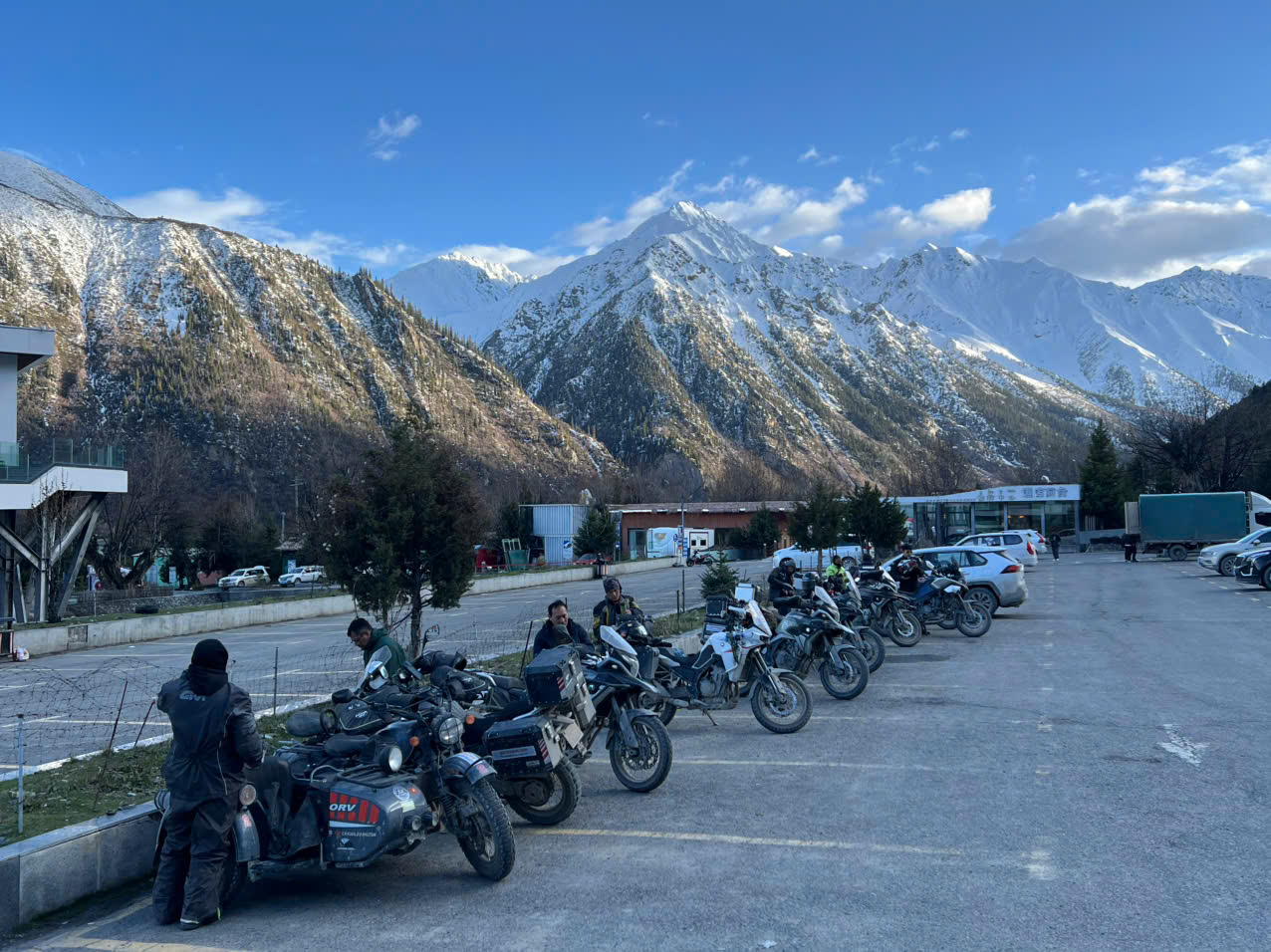
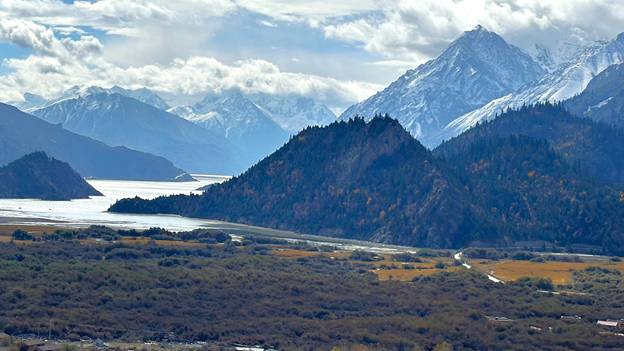
Today is a day of records and strong emotions. Conquering Dongala Pass at 5,130m – one of the highest vehicle‑accessible passes – is a memorable milestone. The road is like a thin thread hugging the sheer cliffs, each bend a test of calmness. Stepping into Batang by the rolling Jinsha River, we officially place our wheels on the legendary artery – National Highway G318, also known as the “Snowy Road”. The checkpoint procedures here are like a “border entry” ritual into the mysterious world of Tibet. The journey continues with two classic passes: windy Lapu and especially Gyeba, where the road cuts straight into the cliff face, revealing the full view of the Mekong River (Lancang) as a deep blue silk ribbon thousands of meters below. The small village of Rumei, nestled at the bottom of a gray‑rock valley, feels utterly isolated, as if time has stopped here. Important note: maintain a steady speed and use engine braking when descending.
6. RUMEI – BASU – RANWU (390km | Highest point: 5,008m | Destination altitude: 3,800m)
Today is dedicated to the masterpieces of both man and nature. After crossing Dongda Pass – known as the “roof of G318” – we will admire one of the great road wonders: the spectacular 72 switchbacks descending into the Nu River (Salween) valley. This ribbon‑like project stands as a testament to the resilient conquest of nature. The landscape changes abruptly from the freezing high passes to the dry, hot valley, then suddenly opens up to the mirror‑like stillness of Ranwu Lake – one of Tibet’s most beautiful lakes, where absolute tranquility and the reflection of the Gyaragar snow‑clad range create a natural meditation space. At night in Ranwu, the starry sky seems closer than ever, offering a mystical setting for long‑exposure photos.
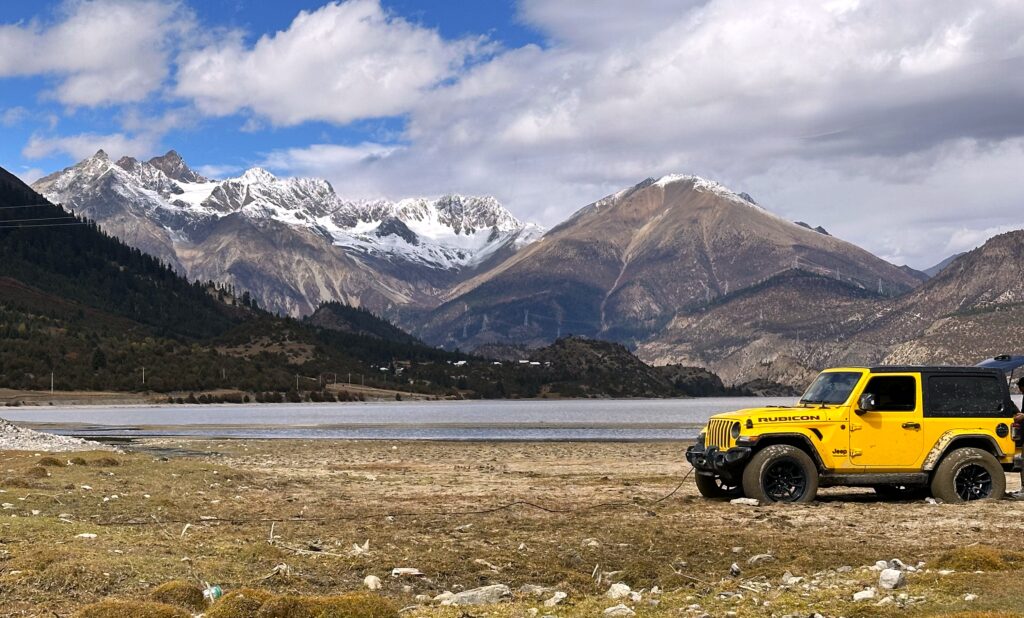
Ranwu Lake – Legend of the Dry Lake and the Monkey Battle: “Ranwu” in Tibetan means “place where corpses pile up”. One legend says the lake was formed by the piled‑up corpses of a water buffalo and a bull that fought fiercely to the death, their bodies turning into the surrounding mountains. Another, more dramatic legend tells of a group of mischievous monkeys that constantly bothered local farmers. In response, the farmers devised a trick: they pretended to drink barley wine and fight with wooden swords. The monkeys, imitating this behavior, killed each other after getting drunk, and their piled‑up corpses formed Ranwu Lake.
Bome is known as the “Switzerland of Tibet”. The name “Bomi” in Tibetan means “ancestor”, because this is the birthplace of Nyatri Tsenpo, the first king of Tibet. Legend says that one of the “hidden lands” mentioned by Guru Rinpoche in his prophecy lies within Bome’s borders, attracting many Tibetan pilgrims since the 7th century.
7. RANWU – BOME – NYINGCHI (350km | Highest point: 4,720m | Destination altitude: 2,900m)
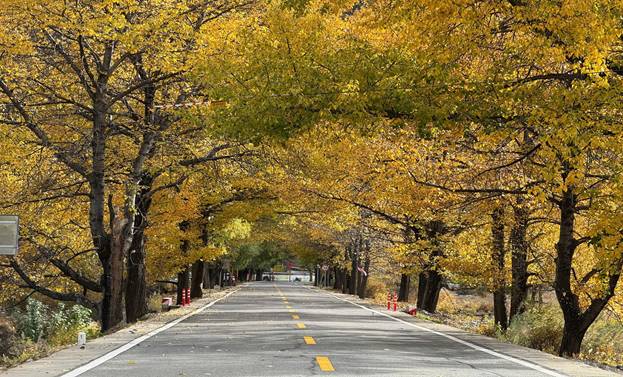
We leave the pristine world of lakes and high passes to enter the “Switzerland of Tibet”. Bome and Nyingchi are blessed by nature with a mild climate, dense primeval forests and long glacial rivers. Riding through Lulang Forest – a lush vegetation area with grasslands, villages and streams – acts as therapy for soul and body after days on the plateau. The highlight of the day is Sejila Pass, where we have a rare chance to admire Namcha Barwa (7,782m) – the highest peak in the eastern Himalayas, often cloud‑veiled and worshipped by Tibetans as a deity. Its fleeting appearance is a blessing for the journey. Nyingchi, at only 2,900m with pleasantly humid air, is an ideal place to rest, enjoy the fragrance of peach forests and prepare for the arrival of the capital Lhasa.
Lulang Forest – The Place That Makes You Forget Your Way Home: “Lulang” in Tibetan means “the place that makes you forget your home”, a name that evokes enchantment and peace. This is a typical alpine meadow, where giant cypresses like the King Cypress – believed to be over 2,500 years old (even predating the Buddha) – are linked to Tonpa Shenrab Miwoche, the founder of the ancient Bon faith in Tibet.
8. NYINGCHI – LHASA (400km | Highest point: 5,013m | Destination altitude: 3,650m)
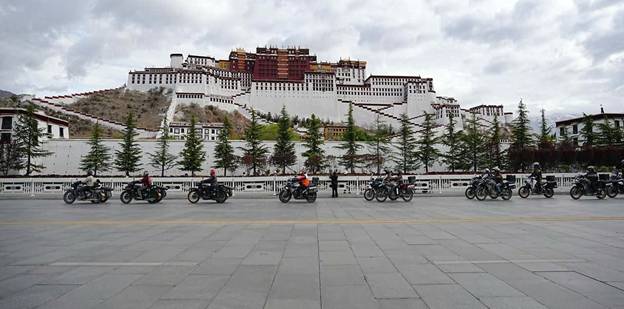
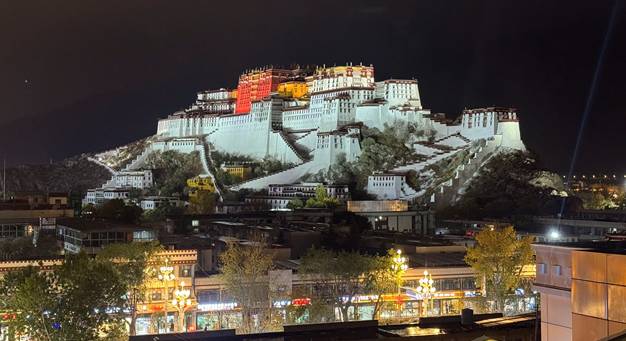
Today we roll on one of the most beautiful roads on the planet – the Lin‑La Expressway. This road runs along the turquoise Niyang River, through vast valleys where Tibetan life unfolds peacefully: yaks grazing, farmers plowing, prayer flags fluttering. The journey is a long psychological preparation, culminating in the emotional moment when, from afar across Mila Pass, the majestic image of the Potala Palace gradually appears on Red Hill, splendid under the sun. That moment is a worthy reward for all the hardships endured, marking our official entry into the spiritual heart of Tibet. On the first evening in Lhasa, take a walk around Potala Square to feel the palace’s solemnity under the lights, merging with the pilgrims performing their kora.
9. LHASA DEPARTURE (9 days option) or (SIGHTSEEING 14 days option) (0km | Highest point: 3,650m)
For one who choose 9 days tour, our bus will take you to the airport for departure.
A day to completely immerse yourself in Lhasa’s dense spiritual atmosphere. In the morning, we enter the Potala Palace – not just a palace but a living symbol of Tibetan power, history and art. Every step, every room, every mural tells a story. In the afternoon, we visit Jokhang Temple – the most sacred temple, where pure faith is expressed through every five‑limb prostration of pilgrims. Merge into the crowd on Barkhor Street, where the scent of juniper incense blends with murmured chanting, creating a transcendent space. In the evening, you may enjoy the magnificent play “Princess Wencheng”, depicting the historic marriage between a Tang dynasty princess and a Tibetan king, a symbol of Han‑Tibetan cultural exchange. Note: Potala entry tickets must be booked in advance and strictly adhere to the allocated time slots.
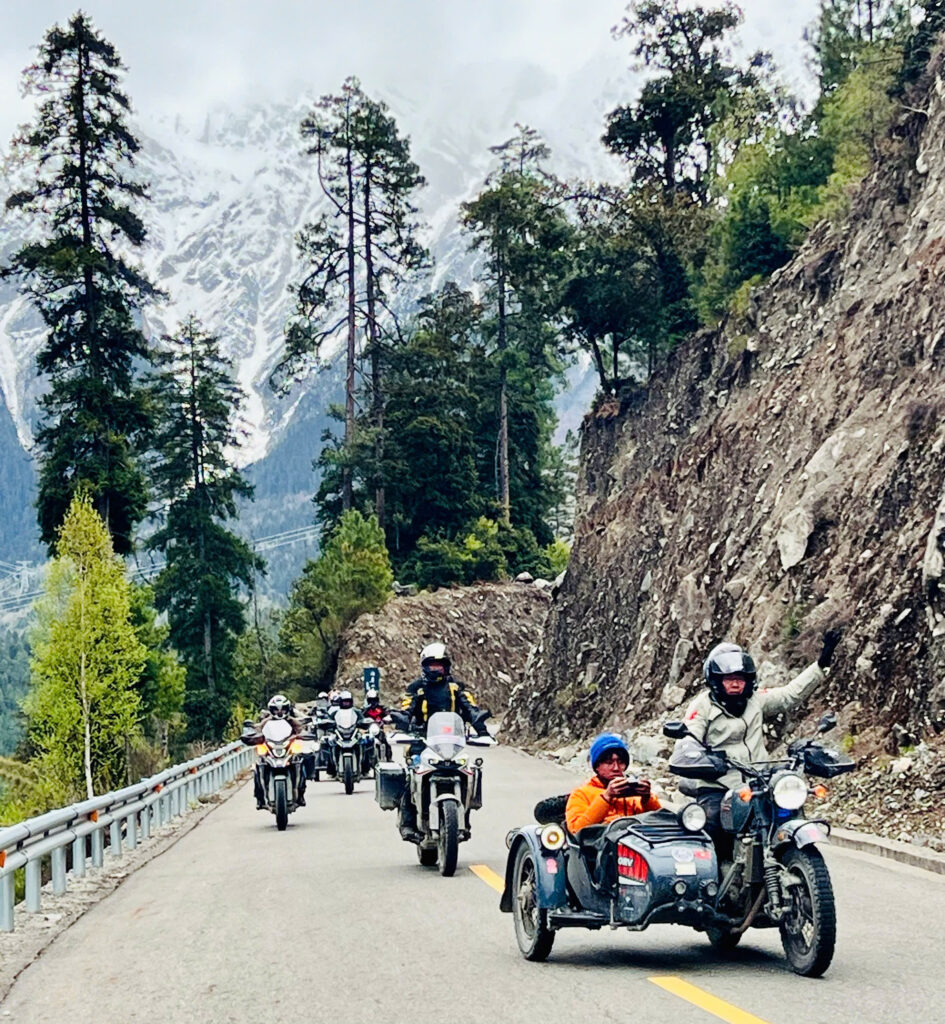
FULL EXPEDITION 14 DAYS CONTINUE:
9. LHASA, (3.656m) – Exploring the Holy Capital (Elev. 3,656m)
For one who chosse 14 days option to ride to Everest Base Camp
A day to completely immerse yourself in Lhasa’s dense spiritual atmosphere. In the morning, we enter the Potala Palace – not just a palace but a living symbol of Tibetan power, history and art. Every step, every room, every mural tells a story. In the afternoon, we visit Jokhang Temple – the most sacred temple, where pure faith is expressed through every five‑limb prostration of pilgrims. Merge into the crowd on Barkhor Street, where the scent of juniper incense blends with murmured chanting, creating a transcendent space. In the evening, you may enjoy the magnificent play “Princess Wencheng”, depicting the historic marriage between a Tang dynasty princess and a Tibetan king, a symbol of Han‑Tibetan cultural exchange. Note: Potala entry tickets must be booked in advance and strictly adhere to the allocated time slots.
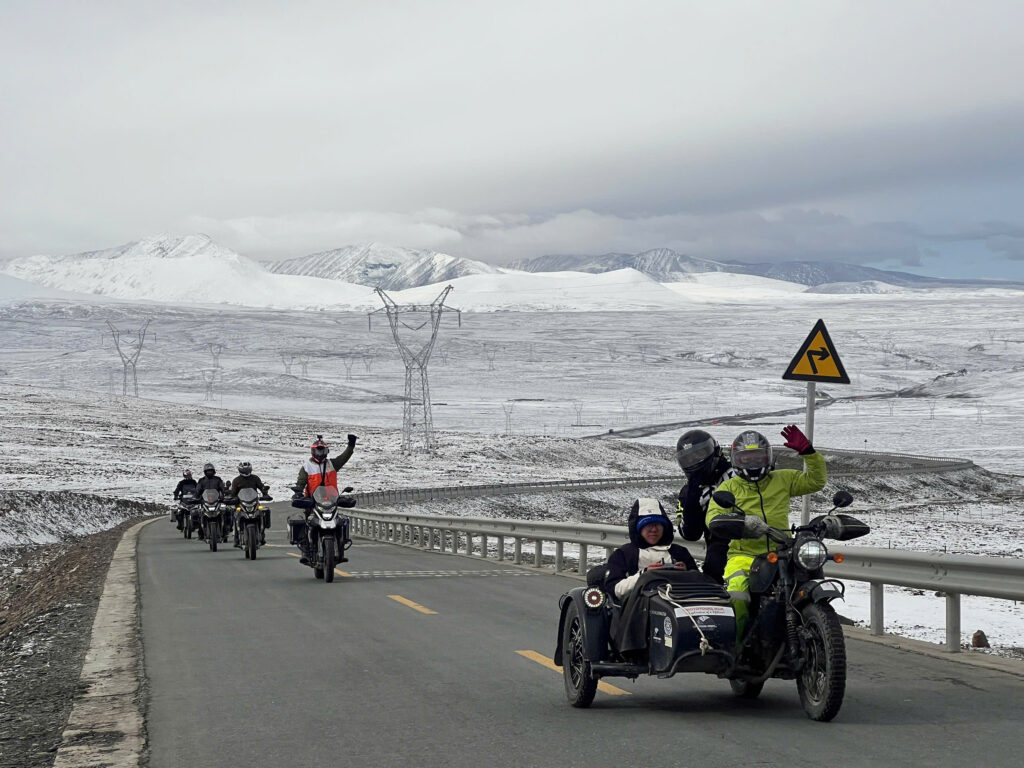
10. LHASA – LHATSE (410km, ~6h, 4,035m) – Along the Legendary Yarlung River
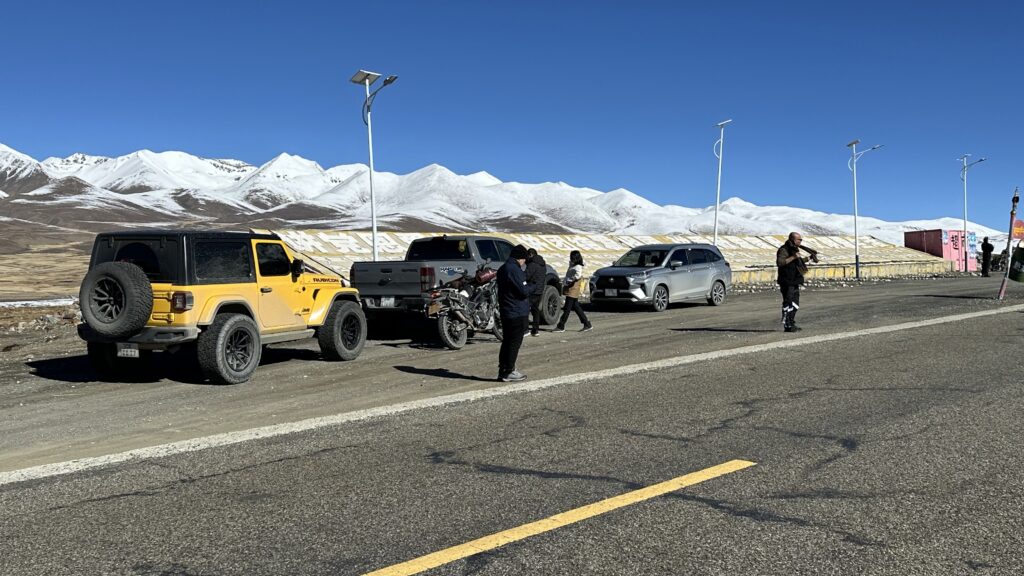
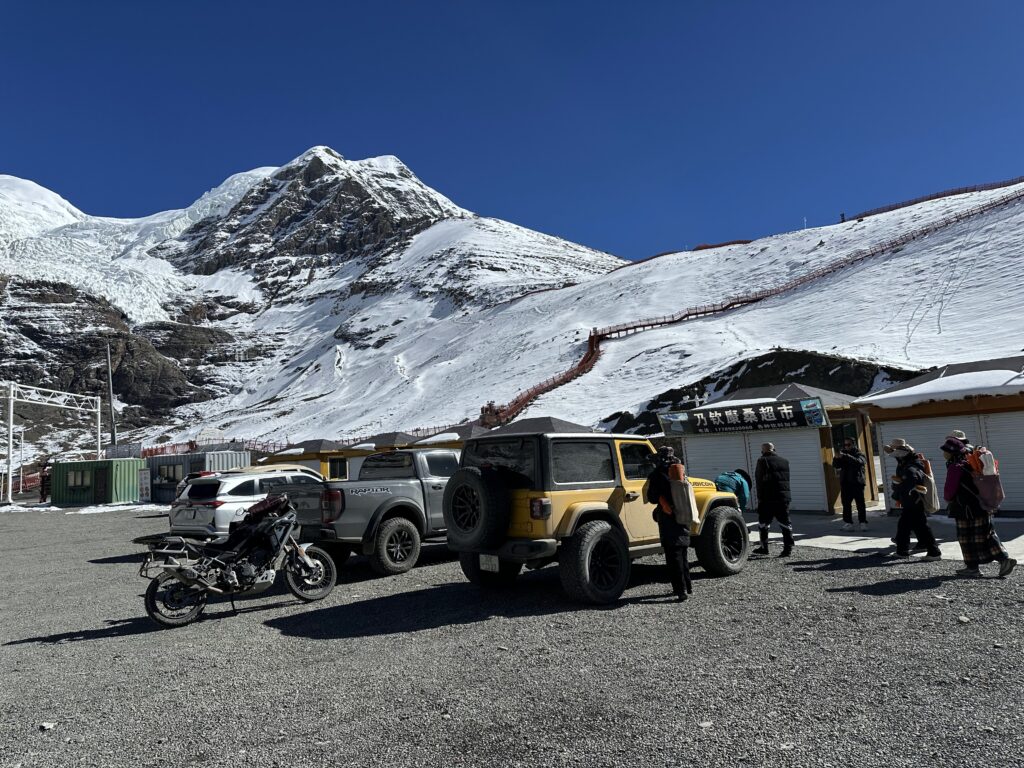
The journey continues, winding along the majestic Yarlung Tsangpo River (flowing at an average altitude of 4,000m) towards Shigatse on 250km of highway. While waiting for permits to enter the Everest Base Camp area, the group will stop for lunch before tackling the busiest section of the Qinghai-Tibet Plateau road in the afternoon. We will conquer the Younongla Pass (4,534m) and admire the endless beauty of the Himalayas. We arrive in Lhatse, an ancient land home to the Lhatse Monastery founded in 1668, situated where the mountains resemble two converging elephants.
11. LHATSE – EVEREST BASE CAMP – OLD TINGRI, 180km ~3h + 100km eco bus (4.348m) – Touching the Roof of the Worl
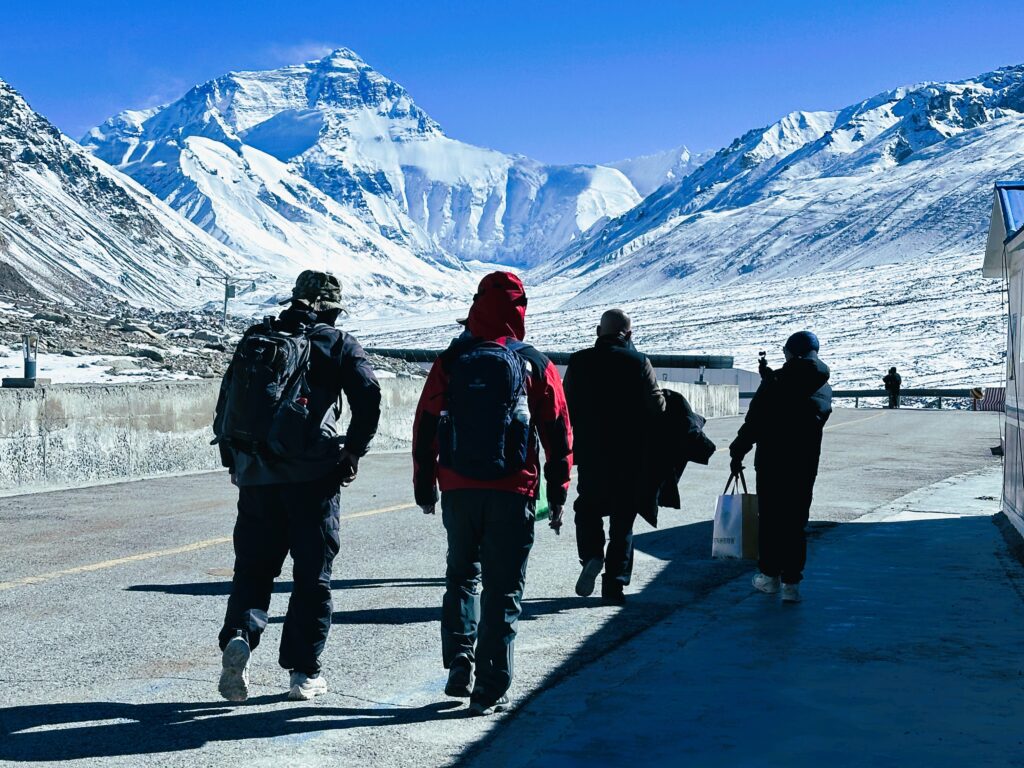
We wake up early, full of energy, ready for an emotional day where the dream of seeing Mount Everest—the "Roof of the World"—comes true. The route takes us over two challenging passes: Jiacuola (5,252m) and Jiawula (5,208m), the latter featuring 108 switchbacks leading to a Tibetan village.
We will park our vehicles and transfer to an electric bus to reach Everest Base Camp at 5,200m. Under a clear blue sky, we will witness the overwhelming, majestic beauty of the planet's highest peak—a symbol of human adventure and resilience.
12. OLD TINGRI – DINGGYE – GYANTSE, 400km ~5h, (3.977m) – Exploring the Wilderness
 Today, we follow a new route almost untouched by tourists to explore the unique, pristine lands of Tibet, passing through Dinggye before reaching Gyantse. MotoTours Asia leverages its unparalleled experience to pioneer this path instead of returning via the standard G318. Drivers must be highly focused for a 15km stretch of gravel road along the lake. Upon arriving in Gyantse, we will have time to explore this charming small town and visit the 15th-century Palcho (Baiju) Monastery, a unique spiritual site where the Sakya, Kadam, and Gelug schools of Tibetan Buddhism coexist.
13. GYANTSE - LHASA, 260km ~4h, (3.656m) – Sacred Lake & The Final Passes.
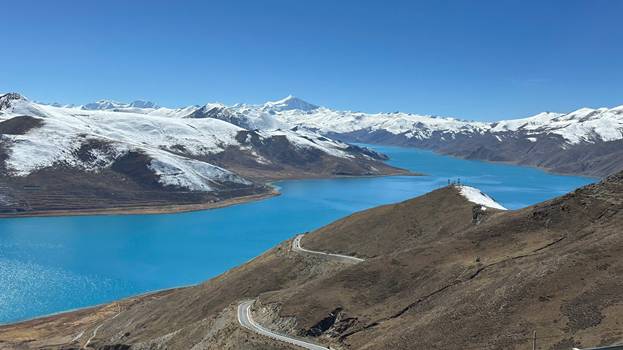
On this leg, we will admire the majestic and mysterious beauty of Yamdrok Lake (Yamdrok-tso), one of Tibet's three most sacred lakes, featuring crystal-clear turquoise waters surrounded by snow-capped mountains. To reach the lake, we must conquer Simila (4,352m) and Karuola (5,039m), the final two passes of the journey. Along the way, we will view the sacred Nyenchen Khangsar mountain (7,782m) and the mystical Karola Glacier. The day concludes with a "happy ending" of overwhelming scenery as we return to Lhasa, return the vehicles, and gather for a farewell party to celebrate the memories made on the Roof of the World.
14. LHASA DEPARTURE
- After breakfast at the hotel, the vehicle will transfer you to the airport, officially concluding the journey.
I. TOUR PRICES: in USD per person.
I.1. OPTION 1, 9 DAYS : KUNMING – YADING – LHASA
| Motorbike type | How to join | Price |
| CFMoto/Voge: 450/500cc | Solo | 3,188 |
| Couple shared 1 bike | 2,490 | |
| CFMoto/Voge 800 – 900cc | Solo | 3,654 |
| Couple shared 1 bike | 2,723 | |
| BMW: F800GS/F850GS | Solo | 4,266 |
| Couple shared 1 bike | 2,999 | |
| BMW: R1200GS R1300GS | Solo | 4,879 |
| Couple shared 1 bike | 3,335 | |
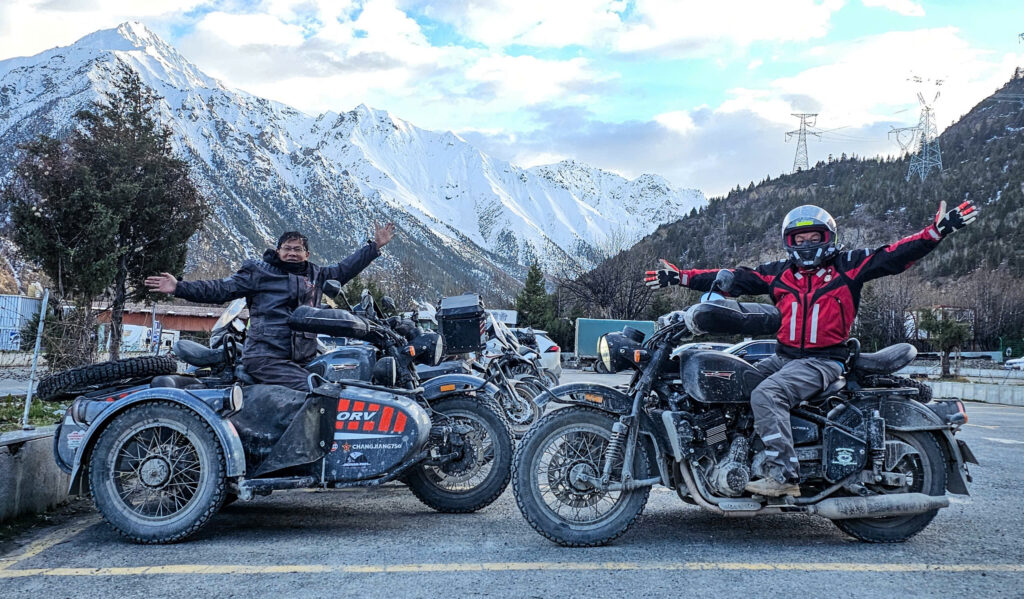
| ChangJiang Sidecar CJ750 | Solo | 4,120 |
| Couple shared 1 bike | 2,956 | |
| TOYOTA RAV 4 (SUV 5 seaters) | 1 person/1 car | 3,684 |
| 2 persons/1 car | 2,737 | |
| 3 persons/1 car | 2,422 | |
| 4 persons/1 car | 2,264 |
- Single supplement: $390
I.2. FULL 14 DAYS ITINERARY: KUNMING – YADING – LHASA – EVEREST BASE CAMP – LHASA
| Motorbike type | How to join | Price |
| CFMoto/Voge: 450/500cc | Solo | 3,999 |
| Couple shared 1 bike | 2,999 | |
| CFMoto/Voge 800 – 900cc | Solo | 4,737 |
| Couple shared 1 bike | 3,434 | |
| BMW: F800GS/F850GS | Solo | 5,770 |
| Couple shared 1 bike | 3,950 | |
| BMW: R1200GS R1300GS | Solo | 6,790 |
| Couple shared 1 bike | 4,460 | |
| ChangJiang Sidecar CJ750 | Solo | 5,625 |
| Couple shared 1 bike | 3,878 | |
| TOYOTA RAV 4 (SUV 5 seaters) | 1 person/1 car | 4,899 |
| 2 persons/1 car | 3,500 | |
| 3 persons/1 car | 3,050 | |
| 4 persons/1 car | 2,820 |
- Single supplement: $615
II. WHAT IS INCLUDED IN THE TOUR PRICE?
Motorcycle/vehicle rental according to the selected option in the price table
Vehicle transport costs (approx. 3,000‑5,000 km):
Before tour: from rental location to hotel in Kunming (Yunnan)
After tour: from Lhasa back to rental location
Rental deposit guarantee
VIP driver’s license exchange: just send your documents; we exchange your license without requiring you to appear at the traffic police office.
Guide travel costs:
One (01) Tibetan guide traveling from Lhasa to Kunming to accompany the group throughout the route
One (01) Vietnamese tour leader flying Hanoi – Kunming, Lhasa – Chengdu, Chengdu – Hanoi (3 flight segments)
Tibet Autonomous Region entry permit and all other necessary permits along the Tibet itinerary
3‑4 star hotels (2 persons/room, odd person sleeps triple) with heating; at altitudes above 3,300m all rooms are equipped with oxygen systems
All meals throughout the journey (except the farewell dinner in Lhasa, which is paid by guests to thank the lead crew)
Bottled water, sweets, coffee: the tour leader buys daily and brings along to serve the group during roadside breaks. (If you drink coffee at restaurants, hotels, rest stops, etc., please pay yourself.)
One (01) experienced Vietnamese guide, deeply knowledgeable about history, culture, religion, etc., riding one bike leading the group throughout the journey
One (01) Tibetan guide riding in the group’s support car to assist with legal procedures and all types of permits throughout the journey
Altitude sickness medication and other medicines to help alleviate altitude symptoms throughout the journey
Oxygen cylinder (large size, for emergency use only)
Cardo intercom system for all vehicles
5G e‑SIM/physical SIM with unrestricted data in China throughout the tour
Airport shuttle: private car pick‑up/drop‑off from airports to hotels and vice versa in Kunming and Lhasa
Vehicle insurance: comprehensive vehicle insurance for cars, civil liability insurance for all vehicles
Insurance for the rider and passenger for self‑driving in China, with compensation up to 1,000,000 CNY
International travel insurance (Diamond package) for Vietnamese guests, with compensation up to 8,000,000,000 VND
III. WHAT IS NOT INCLUDED IN THE TOUR PRICE?
Airfare before and after the trip: flight to Kunming (Yunnan) and flight back from Lhasa (Tibet)
Entrance tickets: ~ $115 – $200), depending on the number of attractions visited
Fuel for vehicles:
SUV: ~$300 400
Motorcycle: ~$150 – $200
Toll fees (SUV pays according to actual or when returning the vehicle; the rental company will send details). Only about 400‑600 km of expressway during the entire journey.
Farewell dinner in Lhasa (organized by guests to thank the tour lead crew)
Tip for lead crew: $200 USD / client
China tourist visa
Anything not mentioned in the “What’s Included” section
IV. REQUIRED DOCUMENTATION PROFILE
- Passport:
– Must be valid for at least 6 months beyond the tour end date.
– Must include Place of Birth information.
- Driving License:
A valid license corresponding to the registered vehicle type issued by your home government.
- Portrait Photo:
– A 4x6cm digital file.
– White background.
– No glasses.
– Forehead and ears must be clearly visible.
V. (FAQs) Frequently Asked Questions for the Yunnan – Sichuan – Tibet Self‑Drive Tour
Page last updated: 4 September 2026. Border, permit and licence rules in China and Tibet change often, so MotoTours Asia reviews this page every six months.
The Yunnan – Sichuan – Tibet self-drive tour at a glance
The Yunnan – Sichuan – Tibet self-drive tour is a one-way guided expedition from Kunming to Lhasa along the Ancient Tea Horse Road and highway G318, run by MotoTours Asia since 1995. The 14-day version covers about 4,000 km with 11 riding days and reaches Everest Base Camp; the 9-day version covers 2,800 km with 7 riding days.
- Route: Kunming → Muli → Yading → Xiangcheng → Batang → Rumei → Ranwu → Nyingchi → Lhasa, then (14-day only) Lhatse → Everest Base Camp → Old Tingri → Dinggye → Gyantse → Lhasa
- Distance: ~4,000 km (14 days) or ~2,800 km (9 days), one-way
- Riding days: 11 of 14 days, or 7 of 9 days
- Time in the saddle: 3 to 8 hours on a riding day
- Highest passes: Dongala 5,130 m and Jiacuola 5,252 m
- Sleeping altitude: from 1,982 m in Kunming to 4,348 m in Old Tingri
- Vehicles: CFMoto / Kove / Voge 450–900 cc, BMW F800GS and F850GS, BMW R1200GS / R1250GS / R1300GS, Chang Jiang CJ750 sidecar, or a self-drive Toyota RAV4
- Price: US$2,264 to US$6,790 per person, depending on option, vehicle and how many share it
- Operator: MotoTours Asia (Voyage Vietnam Co., Ltd, international tour operator licence No. 0491/2006/TCDL-GP LHQT)
9-day or 14-day: which option should you take?
Take the 14-day option if you want Everest Base Camp: it adds six days, about 1,200 km and a rest day in Lhasa, and it is the only way to reach the north side of Everest on this route. Take the 9-day option if your leave is short and Lhasa itself is the goal.
| 9-day option | 14-day option | |
| Finishes at | Lhasa | Lhasa, after Everest Base Camp |
| Riding distance, one-way | ~2,800 km | ~4,000 km |
| Riding days | 7 | 11 |
| Non-riding days | 2 (arrival, departure) | 3 (arrival, Lhasa rest day, departure) |
| Everest Base Camp | No | Yes, on day 11 |
| Highest sleeping altitude | 3,850 m (Ranwu) | 4,348 m (Old Tingri) |
| Highest pass | Dongala 5,130 m | Jiacuola 5,252 m |
| Solo on a CFMoto / Voge 450–500 cc | US$3,188 | US$3,999 |
| Solo on a BMW R1200–R1300 GS | US$4,879 | US$6,790 |
| Four people sharing a Toyota RAV4 | US$2,264 | US$2,820 |
| Single room supplement | US$390 | US$615 |
Motorcycle, sidecar or car: which way should you travel?
Ride your own motorcycle if you have real mountain-road experience. Share a motorcycle if only one of you rides. Take the Chang Jiang CJ750 sidecar if you want the slowest, most photogenic way up. Drive a Toyota RAV4 if you do not ride at all: sharing it with three others is the cheapest way to join, at US$2,264.
| How you join | Who it suits | 9 days, per person | 14 days, per person |
| Solo on a motorcycle | Experienced riders comfortable on long mountain passes | US$3,188 – US$4,879 | US$3,999 – US$6,790 |
| Two people sharing one motorcycle | A couple or two friends, one riding, one pillion | US$2,490 – US$3,335 | US$2,999 – US$4,460 |
| Chang Jiang CJ750 sidecar | Riders who want the classic sidecar experience | US$4,120 solo, US$2,956 shared | US$5,625 solo, US$3,878 shared |
| Self-drive Toyota RAV4 | Non-riders, families, anyone who wants a roof | US$2,264 – US$3,684 | US$2,820 – US$4,899 |
Who this tour is for — and who it is not for
This tour suits fit, experienced riders who want Tibet legally, with permits, a Tibetan guide and a fixed approved itinerary. It does not suit new riders, people with untreated heart or lung conditions, or anyone who wants to leave the convoy and explore alone — Tibet does not permit that, and neither does MotoTours Asia.
This tour is for you if:
- You have ridden long mountain passes before and can use engine braking without thinking about it.
- You are in good general health and accept up to 11 consecutive days of riding at altitude.
- You want to reach Tibet legally, with a Tibet Travel Permit and a licensed Tibetan guide, rather than trying to slip in independently.
- You do not ride, but you are happy to travel pillion or to share a self-drive Toyota RAV4.
- You are comfortable riding in a strict convoy with a group intercom.
This tour is not for you if:
- You are a new rider, or you have never ridden hundreds of hairpins with sheer drops beside you. The Tea Horse Road and G318 are not a place to learn.
- You have a history of heart, lung, blood pressure, asthma, gout or joint problems and have not cleared the trip with your doctor.
- You want to ride alone, choose your own roads, or change the schedule as you go. The itinerary is fixed and approved in advance by the Chinese authorities.
- You would refuse to use the group Cardo intercom. It is compulsory for every rider.
- You expect five-star resorts. On this route, 3–4 star hotels are simply the best that exists.
1. What does the 14-day Yunnan – Sichuan – Tibet itinerary look like day by day?
The 14-day tour runs Kunming – Muli – Yading – Xiangcheng – Rumei – Ranwu – Nyingchi – Lhasa, then Lhatse – Everest Base Camp – Old Tingri – Gyantse – Lhasa. Day 9 in Lhasa is the rest day: no riding, sightseeing in the morning and a full service for the bikes.
| Day | From | To | Distance (km) | Riding time (h) | Sleeping altitude (m) | Meals |
| 1 | KUNMING ARRIVAL | 0 | 0 | 1,982 | D | |
| 2 | KUNMING | MULI | 520 | 8 | 3,000 | B, L, D |
| 3 | MULI | YADING (SICHUAN) | 260 | 4 | 2,900 | B, L, D |
| 4 | YADING | XIANGCHENG | 150 | 4 | 2,700 | B, L, D |
| 5 | XIANGCHENG | RUMEI | 310 | 5 | 3,000 | B, L, D |
| 6 | RUMEI | RANWU | 390 | 6 | 3,850 | B, L, D |
| 7 | RANWU | NYINGCHI | 350 | 7 | 2,900 | B, L, D |
| 8 | NYINGCHI | LHASA | 400 | 6 | 3,656 | B, L, D |
| 9 | LHASA REST DAY | 0 | 0 | 3,656 | B, L, D | |
| 10 | LHASA | LHATSE | 410 | 6 | 4,035 | B, L, D |
| 11 | LHATSE | OLD TINGRI (via Everest Base Camp) | 180 | 3 | 4,348 | B, L, D |
| 12 | TINGRI | GYANTSE | 400 | 6 | 3,977 | B, L, D |
| 13 | GYANTSE | LHASA | 260 | 4 | 3,656 | B, L, D |
| 14 | LHASA DEPARTURE | 0 | 0 | – | B |
B: breakfast, L: lunch, D: dinner. On the rest day you visit the Potala Palace, the Jokhang Temple and the Barkhor old quarter, and you can see the 90-minute outdoor show “Princess Wencheng” in the evening. It is also the day riders take their machines to the garage MotoTours Asia works with in Lhasa for a full check before the Everest leg.
2. Why does a 14-day tour have only 11 riding days?
Three days are not riding days, and each of them is unavoidable. Day 1 is the flight into Kunming, collecting your temporary Chinese licence, loading the bike and the group briefing. Day 9 is the rest day in Lhasa. Day 14 is the flight out, which always needs a connection because Lhasa has no direct long-haul flights.
The rest day is not padding. After seven riding days and a climb from 1,982 m to 3,656 m, the body needs a day without a helmet before the run to Everest Base Camp, and the motorcycles need a service after roughly 2,300 km of mountain road. Lhasa is the only place on the route where both can be done properly.
3. What is the 9-day itinerary if I cannot take 14 days off?
The 9-day option follows exactly the same road from Kunming to Lhasa and stops there: about 2,800 km, 7 riding days, two non-riding days. It leaves out the Lhasa rest day and the six-day Everest Base Camp loop, and the highest place you sleep is Ranwu at 3,850 m.
| Day | From | To | Distance (km) | Riding time (h) | Sleeping altitude (m) | Meals |
| 1 | KUNMING ARRIVAL | 0 | 0 | 1,982 | D | |
| 2 | KUNMING | MULI | 520 | 8 | 3,000 | B, L, D |
| 3 | MULI | YADING (SICHUAN) | 260 | 4 | 2,900 | B, L, D |
| 4 | YADING | XIANGCHENG | 110 | 2 | 2,700 | B, L, D |
| 5 | XIANGCHENG | RUMEI | 310 | 5 | 3,000 | B, L, D |
| 6 | RUMEI | RANWU | 390 | 6 | 3,850 | B, L, D |
| 7 | RANWU | NYINGCHI | 350 | 7 | 2,900 | B, L, D |
| 8 | NYINGCHI | LHASA | 400 | 6 | 3,656 | B, L, D |
| 9 | LHASA DEPARTURE | 0 | 0 | 3,656 | B |
4. How far do you ride each day, and how many hours are you on the bike?
The full route is about 4,000 km one-way over 11 riding days, so days range from 150 km to 520 km. You spend 3 to 8 hours on the vehicle depending on the terrain and how many security checkpoints stop the group for permit inspection. The longest day is Kunming to Muli, 520 km.
Days over 400 km are the expressway days. Motorcycles are allowed on Chinese expressways except in Sichuan, and the surface is excellent with very little traffic, so a 400 km expressway day is far easier than a 200 km day of hairpins. Only about 400–600 km of the whole journey is expressway.
5. Where does the tour start and finish, and how do the rental bikes get there?
This is a one-way ride: it starts in Kunming, Yunnan and finishes in Lhasa, Tibet. MotoTours Asia rents the vehicles in Kunming, Lhasa or Chengdu and trucks them to the group’s hotel in Kunming before departure. At the end you leave the bikes at the collection point in Lhasa and take a 21–29 seat bus back to the hotel.
MotoTours Asia then handles the return logistics, roughly 3,000 km of one-way transport to get every vehicle back to the rental company. That cost is already inside the tour price. You leave Lhasa by air or high-speed train; there is no direct international flight from Lhasa, so you connect through Chengdu or Kunming. Airports are Kunming Changshui (KMG) and Lhasa Gonggar (LXA).
6. What motorcycles and cars can I choose, and can I bring my own bike into China?
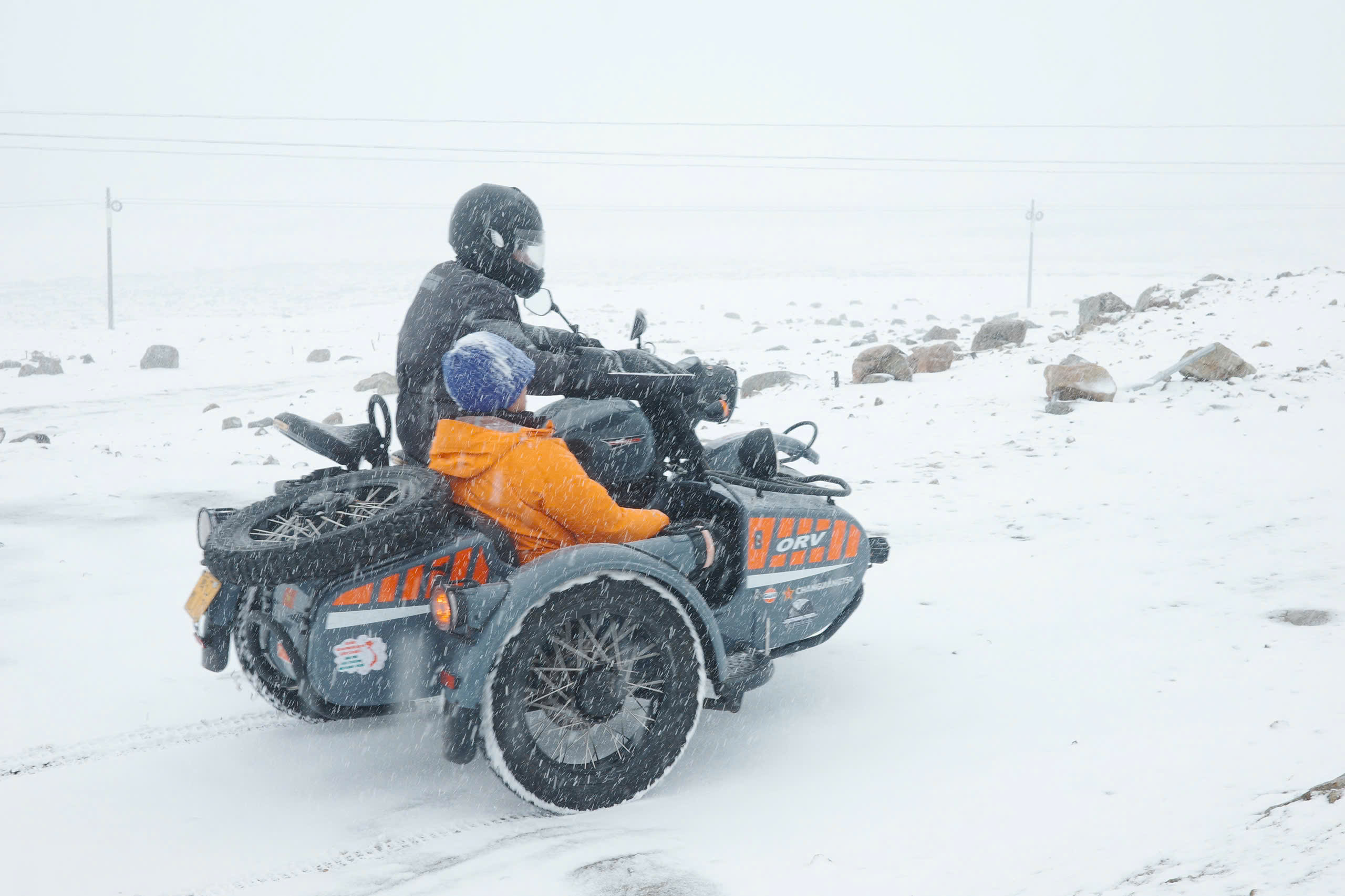
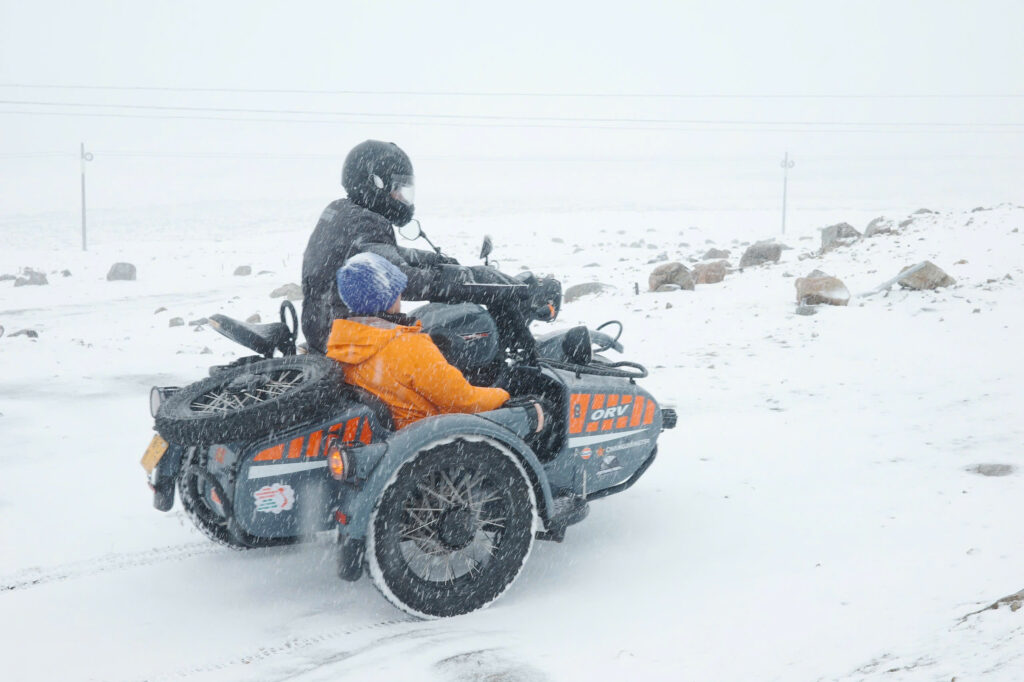
You choose from CFMoto, Kove or Voge 450–900 cc, BMW F800GS and F850GS, BMW R1200GS, R1250GS and R1300GS, a Chang Jiang CJ750 sidecar, or a self-drive Toyota RAV4. Bringing your own motorcycle needs a private departure, not a joining tour: Chinese customs demands a deposit equal to the value of the bike.
That is why the tour is built around vehicles rented inside China: it removes the deposit, the inspection and the temporary import paperwork entirely. If you do want to ride your own machine from your own country into China, contact MotoTours Asia and we will organise it as a private departure. For the self-drive car option, the fleet also includes high-clearance SUVs such as the Tank 300, chosen because their turbo systems keep working in thin air above 4,000 m.
Bringing your own machine is a border question before it is a tour question, and the answer turns on the country that issued your plate. Our guide to riding from Vietnam into China covers which plates may cross, at which gate, and on what paperwork.
7. How much does the Yunnan – Sichuan – Tibet self-drive tour cost?
Prices run from US$2,264 to US$6,790 per person. The cheapest way in is four people sharing a self-drive Toyota RAV4 on the 9-day option; the most expensive is riding solo on a BMW R1300 GS for 14 days. Three things move the price: 9 days or 14, which vehicle, and how many share it.
| Vehicle | How you join | 9 days (US$) | 14 days (US$) |
| CFMoto / Voge 450–500 cc | Solo | 3,188 | 3,999 |
| CFMoto / Voge 450–500 cc | Two sharing one bike | 2,490 | 2,999 |
| CFMoto / Voge 800–900 cc | Solo | 3,654 | 4,737 |
| CFMoto / Voge 800–900 cc | Two sharing one bike | 2,723 | 3,434 |
| BMW F800GS / F850GS | Solo | 4,266 | 5,770 |
| BMW F800GS / F850GS | Two sharing one bike | 2,999 | 3,950 |
| BMW R1200GS / R1250GS / R1300GS | Solo | 4,879 | 6,790 |
| BMW R1200GS / R1250GS / R1300GS | Two sharing one bike | 3,335 | 4,460 |
| Chang Jiang CJ750 sidecar | Solo | 4,120 | 5,625 |
| Chang Jiang CJ750 sidecar | Two sharing | 2,956 | 3,878 |
| Toyota RAV4 (self-drive SUV) | 1 person per car | 3,684 | 4,899 |
| Toyota RAV4 | 2 people per car | 2,737 | 3,500 |
| Toyota RAV4 | 3 people per car | 2,422 | 3,050 |
| Toyota RAV4 | 4 people per car | 2,264 | 2,820 |
| Single room supplement | 390 | 615 |
8. What is included in the price, and what is not?
The price includes the vehicle, all permits, all hotels and meals, both guides, the temporary Chinese driving licence, the Cardo intercom, a China-ready 5G SIM, and roughly 3,000–5,000 km of transporting your vehicle to Kunming and back from Lhasa. It excludes flights, fuel, entrance tickets, tolls, the China visa and tips.
Included: vehicle rental as chosen; vehicle transport before and after the tour; the rental deposit guarantee; the VIP licence-exchange service; travel costs for one Tibetan guide from Lhasa to Kunming and one Vietnamese tour leader on three flights; the Tibet Autonomous Region permit and every other permit along the route; 3–4 star hotels with heating, twin share, with in-room oxygen systems wherever you sleep above 3,300 m; all meals except the farewell dinner; bottled water, snacks and coffee at roadside stops; one experienced Vietnamese guide riding at the head of the convoy; one Tibetan guide riding in the support car to handle permits at checkpoints; altitude medication; a large emergency oxygen cylinder; the Cardo intercom on every vehicle; a 5G e-SIM or physical SIM that works unrestricted in China; private airport transfers in Kunming and Lhasa; vehicle and third-party insurance; rider and pillion insurance up to CNY 1,000,000; and, for Vietnamese guests, a Diamond international travel insurance package up to VND 8,000,000,000.
Not included: flights to Kunming and out of Lhasa; entrance tickets, about US$115–US$200 depending on how many sites you visit; fuel, about US$300–US$400 for an SUV and US$150–US$200 for a motorcycle; expressway tolls on the 400–600 km of expressway; the farewell dinner in Lhasa, which guests host to thank the crew; a tip for the crew of US$200 per guest; the China tourist visa fee (for Vietnamese passport holders, US$92 for northern provinces and US$122 for central and southern provinces); and anything not listed as included.
9. Is the difference between the 14-day and 9-day price a separate Lhasa – Everest Base Camp trip?
No. The Everest Base Camp section is an extension for people who have already ridden the eight days from Kunming to Lhasa, not a standalone product. If you want only the six days Lhasa – Everest Base Camp – Lhasa without the first eight days, contact MotoTours Asia for a separate quotation.
The reason is acclimatisation, not commerce. The eight days from Kunming are what let your body adapt gradually from 1,982 m to 3,656 m before you go anywhere near 4,348 m and Everest. Starting straight in Lhasa and driving to Everest Base Camp within days is a very different, and much riskier, proposition, which is why it has to be quoted and planned separately.
10. I cannot ride a motorcycle. Can I still join, and how are fuel and tolls shared?
Yes. You can join as a pillion passenger behind a rider, or you can share a self-drive Toyota RAV4 with up to three other people. Sharing cuts the price for everyone involved. Shared running costs such as fuel and any tolls are settled between the people travelling in the same vehicle, by agreement among themselves.
MotoTours Asia does not collect or divide fuel money. Whoever shares a bike or a car agrees between themselves how to split the fuel and the tolls for that vehicle. As a guide, budget about US$300–US$400 of fuel for an SUV and US$150–US$200 for a motorcycle across the whole journey, plus tolls on the 400–600 km of expressway.
11. Can a foreigner ride into Tibet independently, without a group?
No. Not on any vehicle, not on any route. Tibet operates a special security regime for foreigners: you cannot buy your own ticket, rent your own bike or travel independently. You must be part of an organised group run by a licensed tour operator, on a fixed pre-approved itinerary, with a Tibetan guide accompanying the group throughout the Autonomous Region.
The group also has to run with a lead vehicle and a sweep vehicle. This is not MotoTours Asia’s preference — it is the condition on which the permits are issued, and checkpoints along the route verify it. Any article or forum post suggesting a foreigner can ride into Tibet solo is describing something that will end at the first checkpoint.
12. What do I need for a Chinese tourist visa, and does MotoTours Asia apply for me?
MotoTours Asia is not licensed to lodge visa applications and cannot apply on your behalf. We can refer you to specialist visa agents. You apply yourself at the Chinese embassy or consulate in your country of residence, and the requirements are set by that mission — not by us.
The core documents are a passport valid at least six months beyond the tour end date and showing your place of birth, a 4×6 cm digital portrait on a white background with no glasses and your forehead and ears visible, and proof of funds. Vietnamese passport holders also need a copy of their CCCD identity card; if the passport is new or has no exit stamp, a CT07 residence confirmation or an old household registration book; and a bank-stamped confirmation of an account balance above VND 50,000,000. Visa fees for Vietnamese applicants are US$92 for northern provinces and US$122 for central and southern provinces.
13. Which permits do I need besides the Chinese visa, and who arranges them?
Four permits, and MotoTours Asia arranges all of them. You need the Tibet Travel Permit for the Autonomous Region, an Alien’s Travel Permit for restricted areas including Dinggye, Tingri and Everest Base Camp, a Military Permit for the sections near the border, and temporary Chinese plates if you are riding a foreign-registered vehicle. Allow 4 to 6 weeks before departure.
You cannot obtain any of these yourself. They are issued to a licensed operator against a fixed, approved itinerary, which is why the schedule cannot be changed once it is filed. Checkpoints along G318 are frequent and the Tibetan guide riding in the support car carries the paperwork and presents it at each one — that is the main reason those days can stretch to seven or eight hours.
14. How do I get a temporary Chinese driving licence, and how long does it take?
MotoTours Asia’s Chinese partner files your application with the local vehicle administration office (车管所, Cheguansuo) at the first city on the itinerary. Send your complete file to MotoTours Asia at least three weeks before departure. There is no test: the licence is prepared in advance and issued against your original documents.
The file is your original passport, valid for at least six months from the day you leave China; a photograph, 3.3×4.8 cm or 4×6 cm, digital, white background, no glasses, no earrings, no smile, hair off the forehead, both ears visible, dark collared top, looking straight at the camera; your valid Chinese visa; and your original national driving licence for the class of vehicle you will actually drive — a car licence for the RAV4, a large-capacity motorcycle licence for a motorcycle. MotoTours Asia’s partner prepares the certified Chinese translation. On the standard package you attend a short photo and traffic-law briefing on arrival and receive the licence the same day. On the VIP package, which is included in this tour’s price, you never appear at a police office at all: the licence is handed to you in Kunming before the tour starts.
15. Is an International Driving Permit (IDP) valid in China and Tibet?
No. China does not recognise the International Driving Permit, in any of its forms, anywhere on the mainland including Tibet. To drive legally in China as a foreigner you must hold a temporary Chinese driving permit, converted from your national licence. There is no exception for tourists and no grace period.
This catches out a lot of riders who have used an IDP across Southeast Asia and assume it will work one more border north. It will not: China never joined the licence-recognition side of the road-traffic conventions, so the only legal document is the temporary Chinese permit. On this tour that conversion is arranged for you and included in the price.
The conversion itself is handled differently by each Chinese province, and where you enter decides which rules apply to you. Our guide to riding from Vietnam into China explains why the province matters more than the map.
16. How hard is the Tea Horse Road and highway G318? Can a new rider join?
No, this route is not for new riders or weak riders. Most of it is sealed, including the G318 itself, but you ride hundreds of consecutive hairpins with sheer cliffs and deep drops, and you cross passes above 4,000 m and 5,000 m one after another. You need real mountain-road experience and quick reflexes.
Sections such as the 99 Bends, the 72 Bends and the 108-tier pass demand confident engine braking — riders who use the brake lever all the way down a 5,000 m pass will cook their brakes. On top of that come sudden snowstorms, landslides and black ice. Some stretches are under repair all year round and still end up muddy or loose with gravel. If you have never ridden a long mountain descent under load, do this tour after you have, not instead of.
17. There is no support truck. What happens if my bike breaks down, and who pays?
After many crossings of this route, MotoTours Asia works with recovery trucks in almost every town and city along it, which is cheaper and faster than dragging an empty truck 4,000 km. Anything repairable on the spot is repaired on the spot. Anything else goes to the nearest garage by recovery truck while you continue in another vehicle.
Who pays depends on the cause. If the damage was caused by you, you pay for the recovery truck and the repair. If the vehicle failed through its own condition or a fault, the rental company pays. Almost every town of any size in China has a workshop able to service large-capacity motorcycles, so a breakdown means a delay, not the end of your tour.
18. What are MotoTours Asia’s convoy rules?
The group rides in a strict caravan formation under the tour leader. There is a lead vehicle, and a sweep vehicle at the back. Every rider carries a group intercom to call out obstacles, blind corners and oncoming traffic. Every evening before a riding day the group meets to go through the next day’s route, terrain and safety rules.
After you sign the booking contract MotoTours Asia sends you the full convoy rules, and they are covered again in the group briefings. Following them is a contractual condition, not a suggestion. If a rider endangers themselves, the group or other road users, or breaks local law, MotoTours Asia will take the vehicle back, terminate the contract on the spot with no refund, and will not cover the cost of getting that rider escorted to the nearest airport.
19. Can I use my own intercom instead of the group Cardo system?
No. Every rider and driver is fitted with the group Cardo system and using it is compulsory. It is a safety tool, not a convenience: it is how the group passes on road conditions, overtaking, oncoming vehicles at blind corners, obstacles and slowdowns. A private rider-to-pillion intercom does none of that.
You are responsible for charging your unit every evening and for looking after it. If it is lost or damaged through your fault, you pay the replacement cost. You are of course free to talk to your pillion as well, but not instead of being on the group channel.
20. Can my partner and I ride separately from the group during the day?
No. Two reasons. Tibet is the most tightly controlled region in China and foreigners may not move around without their Tibetan guide. And this is a joining tour, not a private charter: no member may split off, except briefly and with the tour leader’s permission to deal with a specific situation.
You may well be a far better rider than anyone else in the group. That is not the point. Self-drive touring at this altitude is adventure travel, where anything can happen, and a rider alone on a pass at 5,000 m with no intercom and no guide is a problem for everyone. Read the convoy rules before you sign the contract; accepting them is a condition of joining.
21. How fit do I need to be for this tour?
You need good general health and a genuine appetite for adventure. Train your cardiovascular system — running, swimming or similar — for two to three months before departure, and have a full medical check, especially of your heart and blood pressure. Anyone with a heart, lung, gout, joint or asthma history must talk to their doctor first.
The load is not one hard day; it is consecutive days at altitude, in cold, with a helmet on. Riders who arrive fit sleep better above 3,500 m, recover faster on the rest day and enjoy the Everest leg instead of enduring it. If a doctor tells you not to go, do not go: no itinerary or oxygen bottle compensates for a heart condition at 4,348 m.
22. What is altitude sickness (AMS), and how does the itinerary help you acclimatise?
Acute Mountain Sickness happens when air pressure and oxygen fall as you climb above about 3,000 m, causing headache, nausea, breathlessness and broken sleep. This itinerary is built on the rule “climb high during the day, sleep low at night”, so your body adapts over roughly three days before you ever sleep high.
In practice: on day 3 you cross the Bala pass at 4,700 m but sleep down at Yading; on day 5 you cross Dongala at 5,130 m and sleep at Rumei around 3,000 m. After Ranwu at 3,850 m the next night drops back to 2,700 m before you reach the Tibetan plateau. By the second half of the tour, when you are sleeping between 3,656 m and 4,348 m, your body has already adapted. Across every Tibet self-drive tour MotoTours Asia has run, no guest has suffered altitude sickness and no guest has needed the oxygen bottle.
23. What are the symptoms of altitude sickness, and when is it an emergency?
Mild symptoms appear a few hours to a day after passing 3,000 m: headache, dizziness, fatigue, nausea, loss of appetite and poor sleep. It becomes an emergency with severe breathlessness at rest, coughing pink froth, confusion, loss of coordination or unconsciousness — the signs of high-altitude pulmonary or cerebral oedema.
In that case there is one immediate treatment: get the person below 3,000 m and to medical care as fast as possible. Nothing else substitutes for descending. Tell the guide the moment you feel wrong rather than pushing on quietly; mild AMS handled early is a slow morning, and mild AMS ignored is an evacuation.
24. What does the tour do to prevent and treat altitude sickness?
Beyond the “climb high, sleep low” itinerary, every hotel above 3,300 m has an in-room oxygen supply, the support car carries a large oxygen cylinder and a stock of altitude medication, and the guides watch the group daily and know how to spot the early signs before the guest does.
The three layers work together. The itinerary does most of the work by giving your body three days of gradual exposure. The oxygen rooms mean the nights above 3,300 m are restful rather than sleepless. The cylinder and medication in the car are the reserve for the case that has not yet happened on this tour. Guides brief the group on what to report and when.
25. What medical kit does MotoTours Asia carry, and what should I bring myself?
The support car carries a large oxygen cylinder, an SpO2 pulse oximeter and first-aid kits stocked with altitude medication plus remedies for colds, coughs and stomach upsets. You should bring your own prescription medicines, supplements that help oxygen circulation, painkillers, digestive medicine, and serious sun protection.
Useful additions are vitamin C, A and E, magnesium and zinc, circulation supplements, and Rhodiola (“Hông Cảnh Thiên”), a Chinese herb used to help oxygen circulation. Bring paracetamol or ibuprofen for headaches. Keep your neck and chest warm. And bring high-SPF sunscreen, lip balm, moisturiser and polarised sunglasses: you ride between 3,000 m and 5,300 m, much closer to the sun, and the ultraviolet on the plateau will burn skin that has never burnt before.
26. When is the best time of year to ride Yunnan – Sichuan – Tibet?
Autumn, September to November, is the best window: dry, clear skies, no snowfall on the passes, forests turning gold and red, and white peaks above. Spring, April and May, is the second choice and the best time to actually see Everest, because the summit is less often hidden by cloud.
Spring (April–May) brings clear skies and peach blossom in Nyingchi, but snowstorms are still possible on passes above 4,000 m — a season for riders who like a challenge. Autumn (September–November) is dry and settled. Winter (December–February) is severe, with blizzards and deep snow that can close the high passes for days, but for a confident rider it is visually the most spectacular time of all. Summer (July–August) is the rainy season and the one to be careful with: rain on G318 triggers landslides.
27. What clothing do I need when the route runs from rainforest to permanent snow?
Dress in layers you can add and remove: thermal base layer, a light fleece or down mid layer, and a warm insulated outer jacket plus a thin waterproof windproof shell. Add a warm hat that covers your ears and a neck scarf. The temperature swings between tropical Yunnan and the Tibetan plateau are extreme in both directions.
Riders need more than that: armoured riding kit with waterproof and windproof lining, winter gloves, a full-face helmet, and polarised sunglasses to cope with the glare reflected off snow at altitude, which causes snow blindness. Add high-SPF sunscreen and a lip balm against cracking. Passengers in the RAV4 need a warm jacket, hat, gloves and comfortable shoes for walking at the sites.
28. What are the hotels and the food like on such a remote route?
Hotels are the best 3–4 star properties available in each place, clean, heated, and with in-room oxygen wherever you sleep above 3,300 m. Meals are included throughout and move with the region: rich Yunnan cooking, fiery Sichuan, then Tibetan food including yak meat and butter tea. Tell MotoTours Asia in advance about vegetarian, dietary or allergy needs.
In the remotest places — Rumei, Ranwu, Old Tingri — the hotels are simpler, but they are still the best the town has, and they are warm. On the food side, groups usually appoint one member to hold a shared kitty, typically CNY 200–500 per person, to cover drinks and anything above the standard meal allowance: a speciality restaurant, a table with a night view of the Potala Palace, or a place with Tibetan dancing and live traditional music.